
International Day of Women in Mining: Meet Nuton Acting CEO, Cecilia Perla
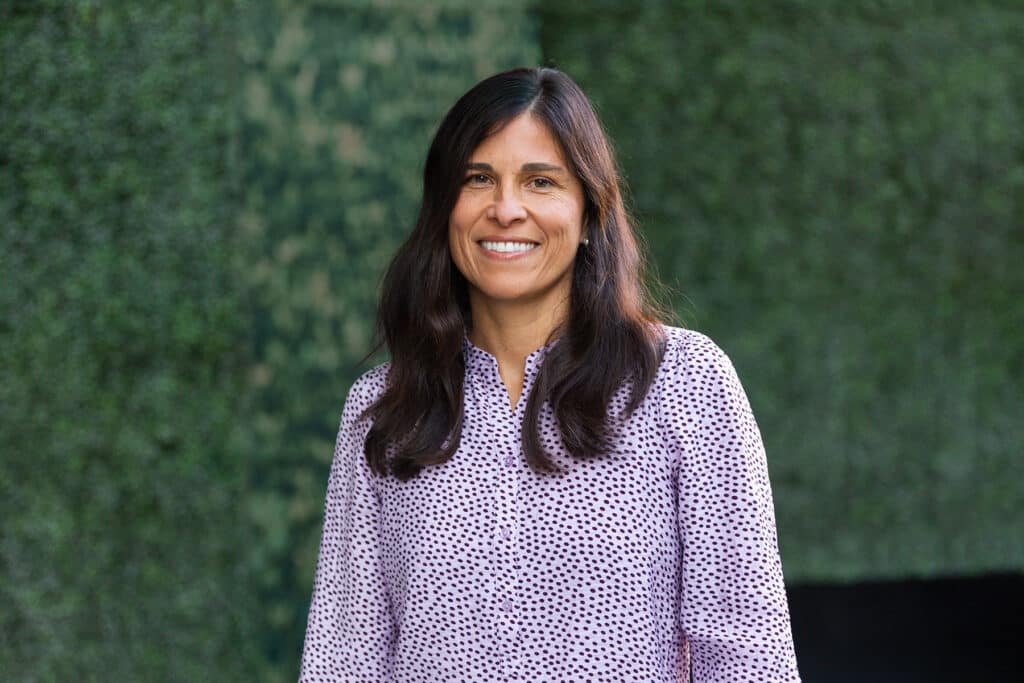
Nuton is proud to join the global mining community in celebrating International Day of Women in Mining—a moment to recognize the leaders redefining the industry’s future. At Nuton, that commitment extends far beyond a single day, as we champion innovation and inclusion every day. At the forefront of this transformation is Cecilia Perla, driving a cleaner, smarter, and more sustainable future for copper.
As Vice President of Growth & Sustainability and Acting CEO, Cecilia exemplifies female leadership driving transformation. With more than 15 years of experience spanning commercial strategy, market analysis, and decarbonization, she brings both vision and execution to her role.
Cecilia’s perspective is grounded in rigorous academic achievement. She holds a BA in Economics from the Pontificia Universidad Católica del Perú, an MA in Economics of Development from Erasmus University Rotterdam, and a PhD and MA in Politics from Brown University, where she specialized in the political economy of extractive industries.
From policy and research roles in Peru and London, she moved into metals market analysis before spending a decade at Rio Tinto. There, she advanced from senior analyst to principal advisor, contributing to developing and executing commercial strategy for copper, shaping net-zero pathways and progressing decarbonization initiatives. Today, Cecilia brings this deep expertise to Nuton, accelerating our mission to produce more and better copper to support global demands from electrification.
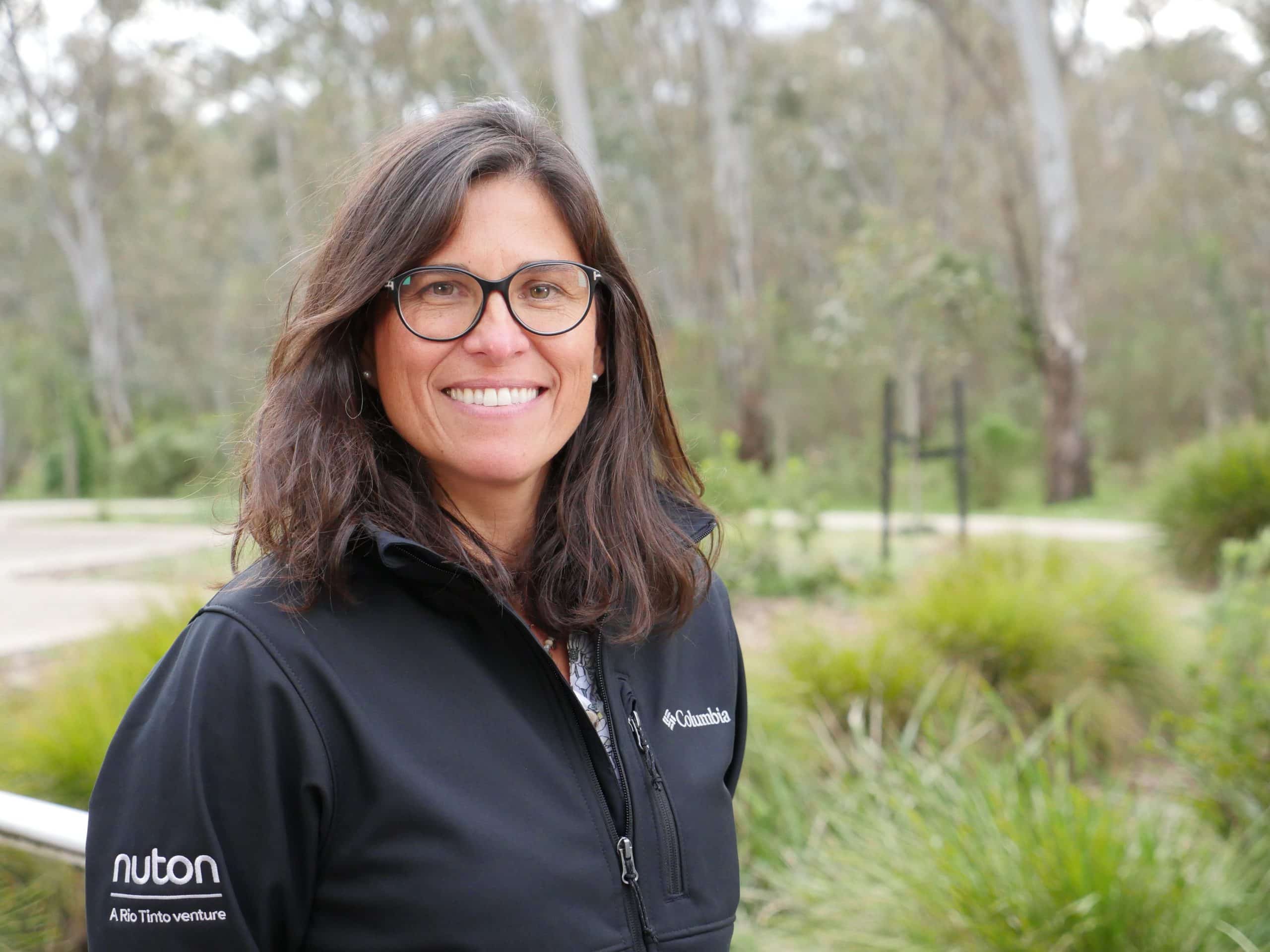
Cecilia Perla
Vice President of Growth & Sustainability, Acting CEO
Meet More Women in Mining at Nuton
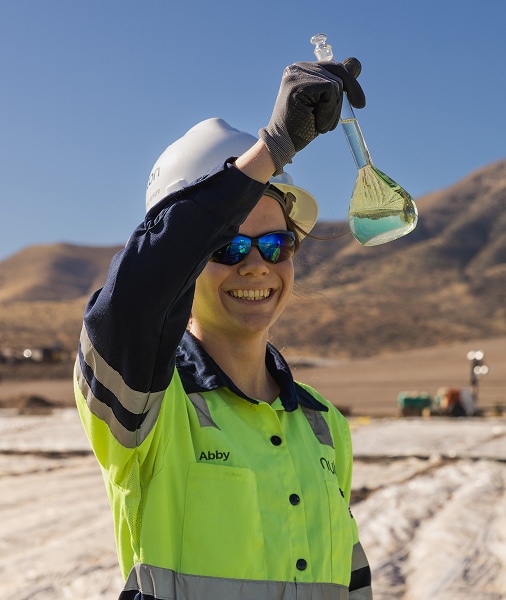
Abigail, Chemical Engineer
Abigail Haan, a Chemical Engineering graduate from Orange County, California, found her answer during a mining internship last summer. “I loved seeing all of the heavy equipment on site and learning about the variety of chemical processes it takes to go from rocks to pure copper,” she says. That initial spark led her to search for a program that offered breadth and depth, which brought her to Nuton as a chemical engineer to focus on microbial growth, cell counts and reactor maintenance.
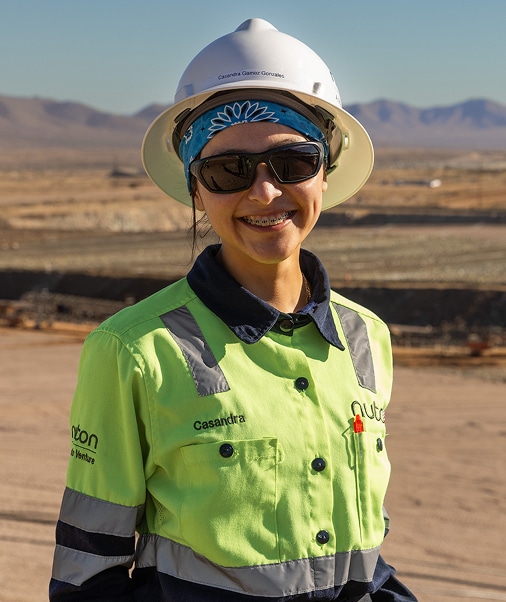
Cassandra, Mining and Geological Engineer
Casandra Gamez Gonzales is a Mining and Geological Engineering graduate born and raised in Phoenix. She discovered her passion for mining during a tour of the San Xavier Research Laboratory. Later, she was inspired by her senior design project, in which she led a team of mining engineers in developing a drill-and-blast pattern for an underground panel caving excavation. This experience ignited a drive to work with a company that values innovation, growth, and culture. Today, she’s a Nuton Mining and Geological Engineer focused on construction oversight.
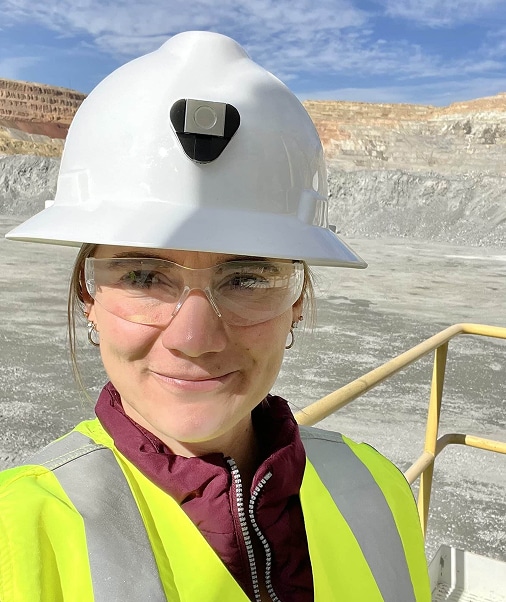
Jeana, Sustainability Advisor
Jeana Ratcliff, who works as a Senior Sustainability Advisor at Nuton, was born to be a scientist. Her message to young females considering a science-related profession? “You don’t have to know everything, and you don’t have to be perfect. Many engineers and scientists, particularly women, struggle with this.”
In celebration of International Day of Women and Girls in Science, Nuton proudly recognizes the women driving our innovation forward while inspiring the next generation to explore opportunities in STEM. Meet Abigail and Casandra, two University of Arizona alumnae engineers helping define sustainability at Nuton.
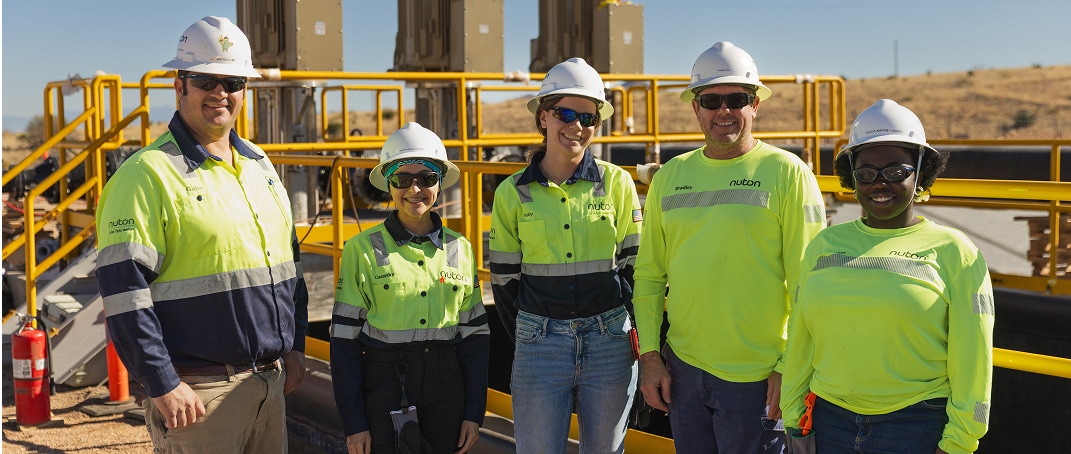
Women in STEM: engineering careers in sustainable mining
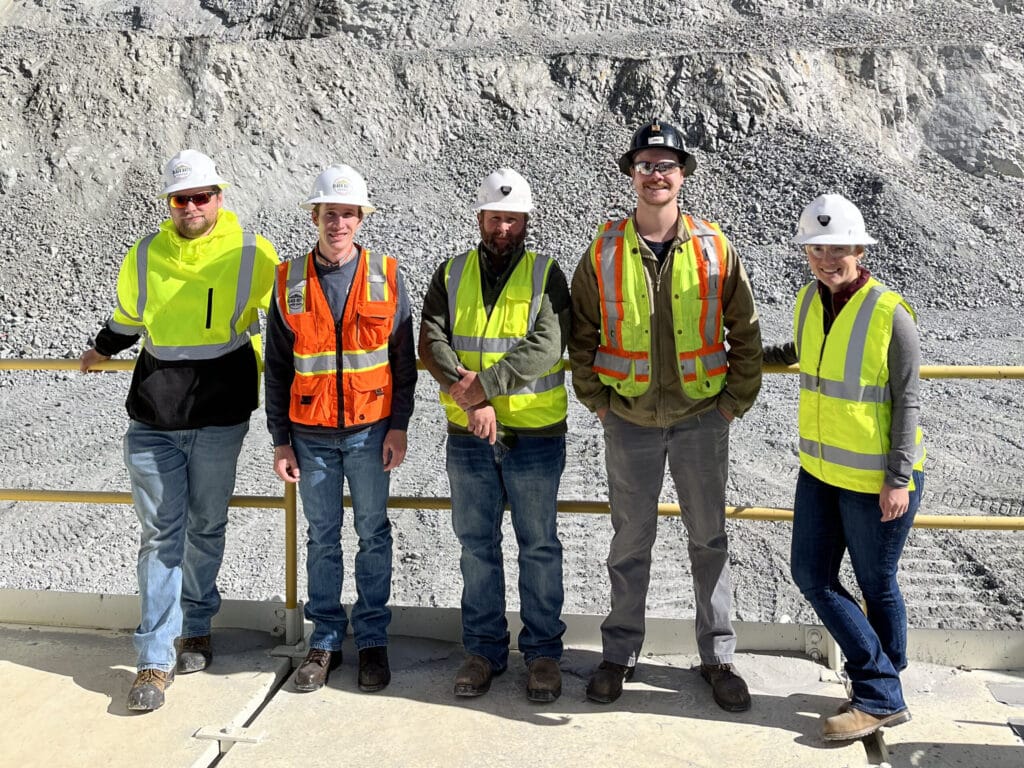
Abigail and Casandra are engineers, both hailing from the University of Arizona and both part of the Nuton Graduate Program. Their careers began in the mining industry during a pivotal shift toward green technology. Abigail and Casandra are currently on the ground at Johnson Camp Mine, Nuton’s first industrial-scale deployment, turning the goal of sustainable copper leaching into a daily reality.
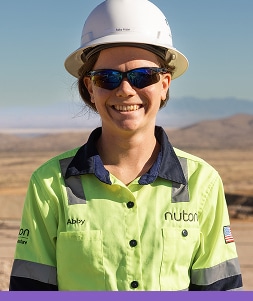
Abigail Haan
Chemical Engineering
Focuses on microbial growth, cell counts and reactor maintenance.
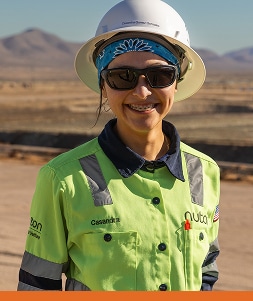
Casandra Gamez Gonzales
Mining & Geological Engineering
Focuses on construction oversight and technical guidance for the Nuton Pad.
Unearthing the world of mining
Both engineers launched their careers with the same fundamental curiosity: What turns a rock into the metal our world depends on?
Abigail, a Chemical Engineering graduate from Orange County, California, found her answer during a mining internship last summer. “I loved seeing all of the heavy equipment on site and learning about the variety of chemical processes it takes to go from rocks to pure copper,” she says. That initial spark led to a career search for a program that offered breadth and depth, which brought her to Nuton.
Casandra is a Mining and Geological Engineering graduate born and raised in Phoenix. She discovered her passion for mining during a tour of the San Xavier Research Laboratory. Later, she was inspired by her senior design project, in which she led mining engineers to develop a drill-and-blast pattern for an underground panel caving excavation. This experience ignited a drive to work with a company that values innovation, growth, and culture.
Why Nuton?
The mining industry has previously been defined by tradition; however, Rio Tinto’s Graduate program offers a fresh perspective, and at Nuton, roles stand out as a departure from traditional mining roles. Abigail and Casandra sought out this rotational structure, allowing early-career engineers to experience a variety of the business’s facets, providing perspective not only on the “how” but also on the “why.”
For Abigail, Nuton was appealing because it offered the opportunity to see the entire ecosystem of an industrial plant.
“It was exactly what I was looking for during my job search: a rotational program to get exposure to a variety of positions within an industrial plant.”
Abigail Haan
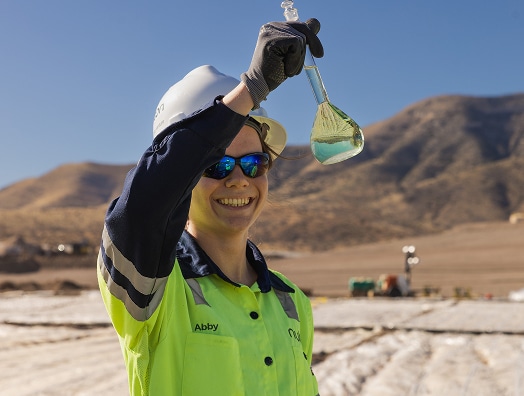
Casandra’s path was guided by a desire to align her technical skills with her personal values. Nuton provided that with its innovative goal of sustainability in mining.
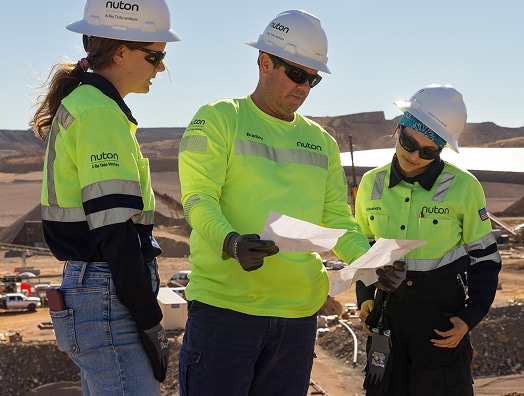
“I wanted to be part of a team that focused on developing safe operational and processing practices to reduce environmental and social impacts.”
Cassandra Gamez Gonzales
“Farming” microbes: A day in the life at Johnson Camp Mine
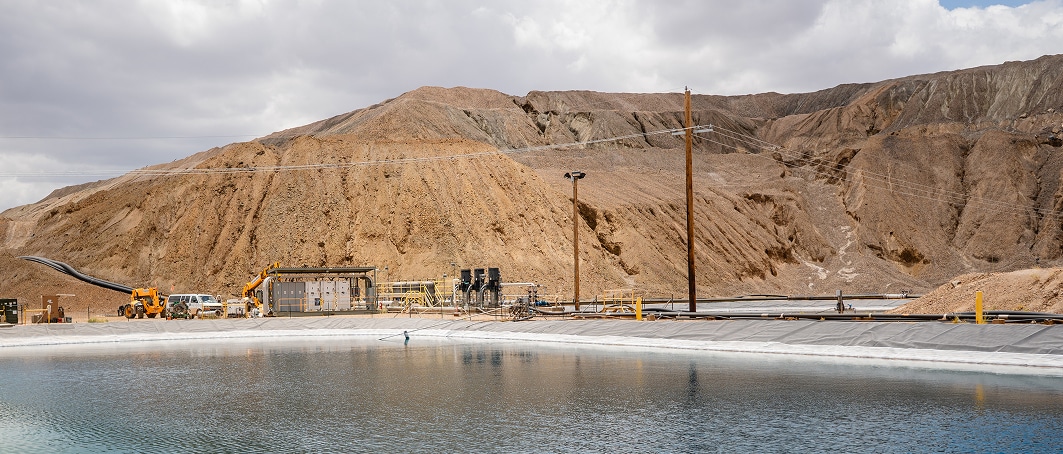
At Nuton’s Johnson Camp Mine, Nuton´s first industrial-scale deployment, high-level engineering meets real-world application. Every day, Abigail and Casandra observe groundbreaking ideas as they work directly with sustainable, state-of-the-art technology.
Abigail’s day-to-day involves maintaining microbial growth. Her core goal is “farming” microbes, regulating metabolic health and growth rates to drive the biomining process. She understands microbes at a cellular level. But it doesn’t stop there. “Outside of that, I try to get in the field as much as possible to understand what different teams are working on and get exposure to other parts of the process.” Learning something new is a crucial part of every day.
Casandra splits her time between two sectors of the mine. Part of her time is dedicated to learning modeling, project benchmarking, and designing equipment improvements. As an engineering project manager, Casandra has cultivated a passion for the process and operations side of Nuton. The rest of her time is invested in that passion, in the field overseeing and providing technical guidance on the construction, engineering, and commissioning of vital plant components.
Challenging the status quo: STEM careers in copper
Abigail and Casandra’s budding careers represent a vital shift in the mining landscape. Their work bridges the gap between classroom theory and industrial-scale application, and these graduates are at the forefront of Nuton’s mission to redefine how the world sources copper. For Casandra, reshaping the mining industry begins with healthy skepticism and a refusal to accept “the way it’s always been” as the gold standard. “Innovation comes from those who question the conventional,” she says, emphasizing that a more sustainable and efficient future is only possible when we dare to disrupt.
Their careers serve as a blueprint for the next generation of talent, creating space for young women and girls to follow in their footsteps and showing that meaningful change often begins with challenging long-standing industry norms.
From vaccines to copper: a biologist’s unlikely journey into mining
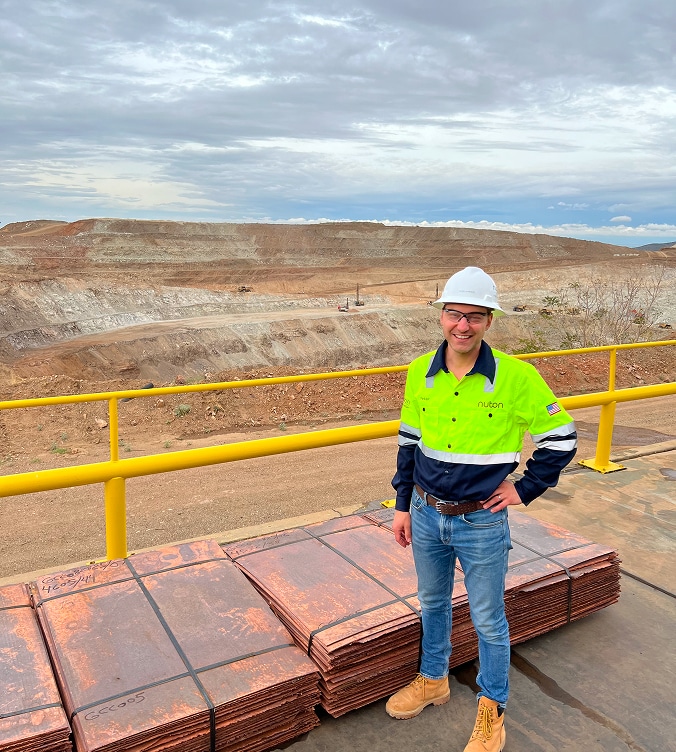
Peter Lavrencic owns a front-row seat to mining history in the making. As Nuton heads towards producing first copper at Gunnison Copper Corp.’s Johnson Camp Mine in Arizona, Peter, Nuton’s Biotechnology Lead, plays a key role in the biological process behind a major milestone: the first industrial-scale demonstration of the proprietary Nuton® Technology.
With first Nuton Copper expected in late 2025, this moment marks a turning point for the venture—validating the Nuton Technology’s proprietary process at scale and paving the way for commercial deployment and a new era in sustainable copper production.
A biochemist’s path to bioleaching
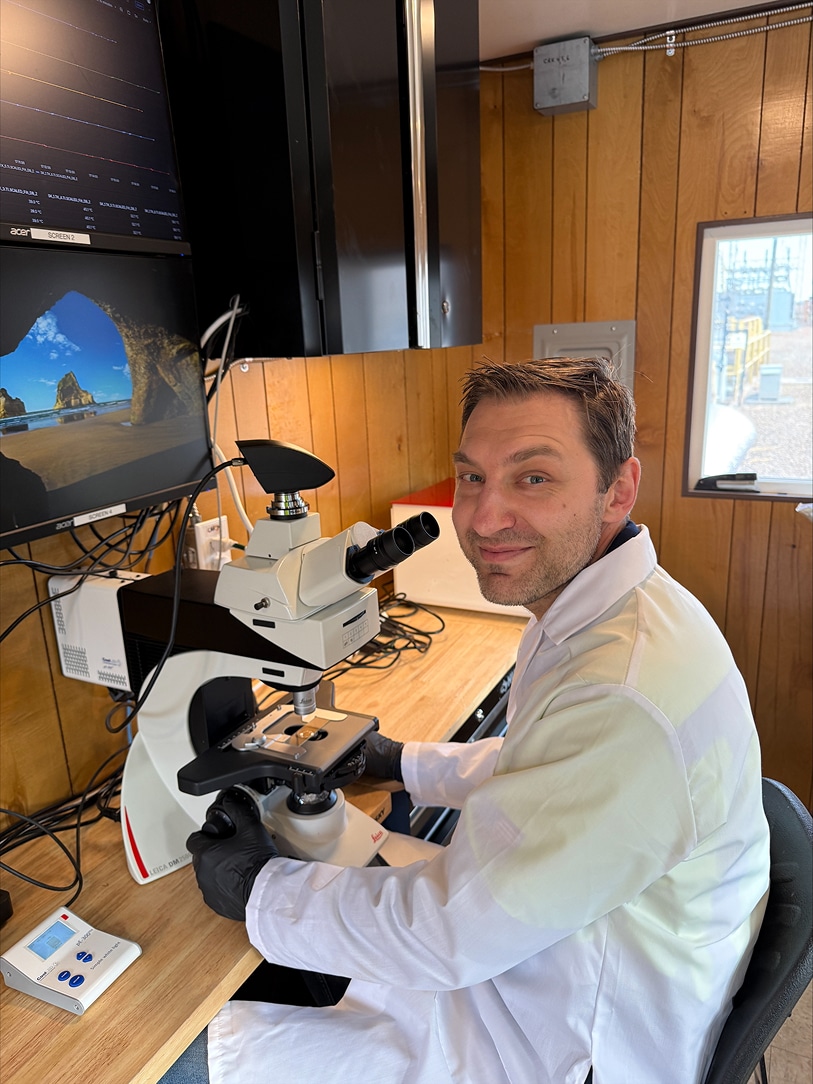
Peter says he’s had an untraditional career path crossing from pharmaceuticals to mining. “It’s incredible how you can transfer your knowledge across what seem like unrelated industries.” He previously worked in the manufacturing, development, and regulatory affairs of vaccines and biological medicines in the pharmaceutical industry. As an ever-curious biochemist and biologist, Peter was so drawn to Nuton’s breakthrough in environmentally conscious copper mining technology that he swapped his career in pharma for one in cutting-edge copper.
Today, Peter’s work bridges the fields of biology and mining. Instead of growing biological medicines in bioreactors for pharmaceuticals, he’s applying similar science to bioleaching in the mining sector. “Mining has historically been seen as a ‘polluting and non-environmentally friendly’ industry, but this new biological process of bioleaching is a positive shift toward a cleaner, more sustainable method whilst delivering a critical resource for our society.”
Microbes that mine: the science behind the heap
Nuton’s approach to copper mining is game-changing. “Our process is more cost-effective and better for the environment compared to traditional methods mining this ore type.” Moving away from traditional, high-energy-use methods, the Nuton® Technology employs a proprietary biological process using specially curated microorganisms to extract copper from ore.
Massive bioreactors serve as breeding grounds where Nuton’s microbes are born to mine. The facility encompassing the bioreactors – the BIGF for short – is the star bioreactor at Johnson Camp Mine where the microbial magic happens.
“It’s like a maternity ward of microbes, where we provide the incentive and conditions to multiply the right microbes at a maximal rate,” Peter says. These microbes work by “eating” ore components such as iron in the ore, which through a series of chemical reactions releases copper in a process that’s as fascinating as it is revolutionary.
“In the pharmaceutical industry, we grow cells and use their components for the medicine. What we’re doing in mining is somewhat similar. We’ve designed a special composition of microbes to grow in large bioreactors and the cells themselves are the ‘medicine’ for our heap.”
Scaling up sustainably
Peter’s focus is on optimizing the biological side of the process – ensuring the right diversity of microbes is fine-tuned to perform reliably at scale. This is no small feat: the microbes must thrive in harsh mining environments, adapt to changing conditions, and work together in complex chemical reactions.
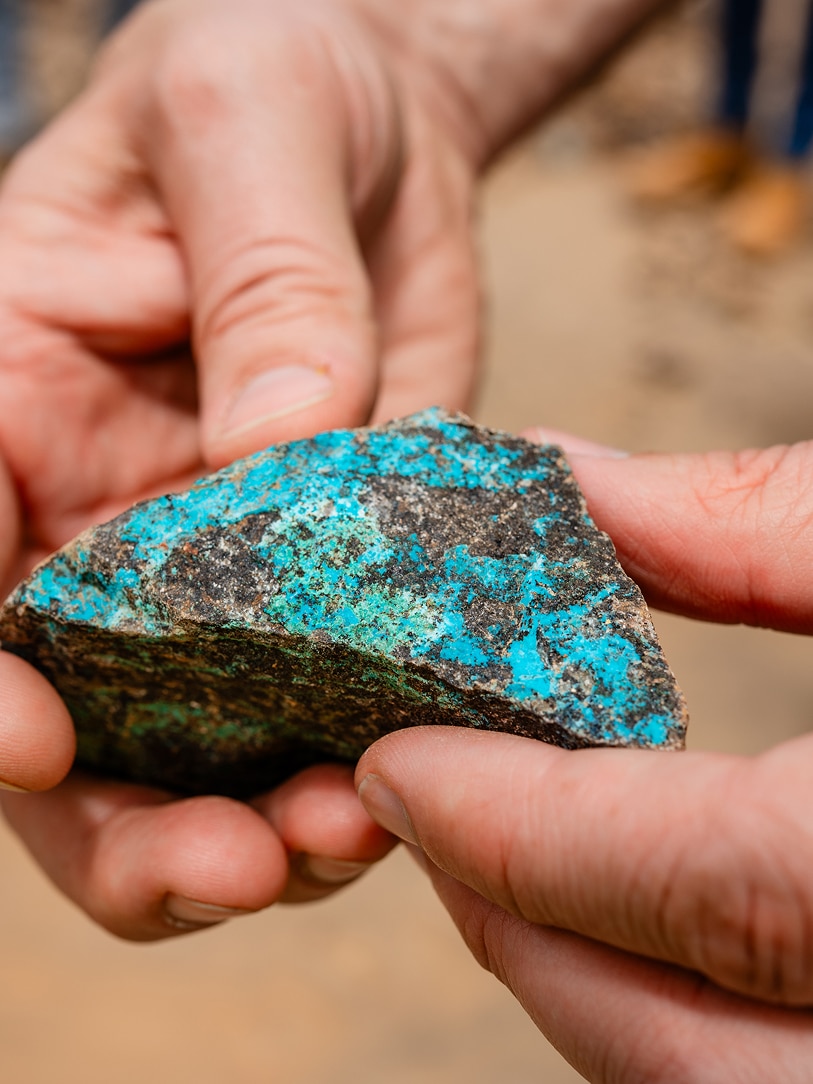
“People have been mining copper for centuries. Much of the easy-to-mine copper has been mined out. Additionally, the world is more conscious of the environment.” Peter proudly adds that the Nuton Technology isn’t just about producing copper – it’s about doing it more sustainably. These microbes consume carbon dioxide as they work, and water is continuously recycled — turning mining’s biggest environmental challenges into solutions.
Johnson Camp: a launchpad for the future of copper mining
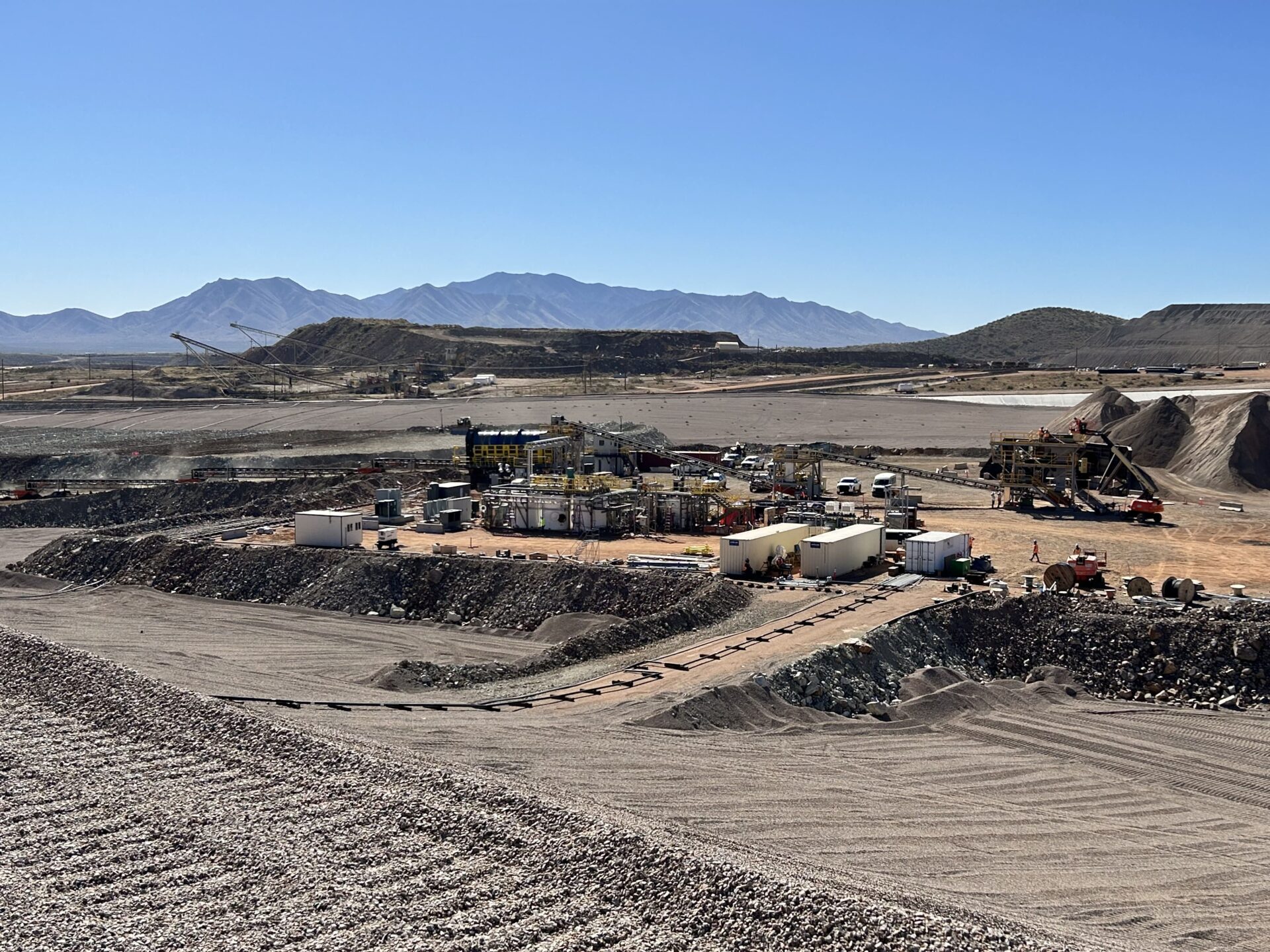
When Peter joined Nuton, everything was still on paper for JCM. Today, Johnson Camp Mine is a buzzing launching pad, with key infrastructure connected and ready for commissioning – the final step before copper production begins.
For him, the biggest reward of the project has been seeing it come off the paper into real life, and the collaboration taking place across Nuton’s team to make this a reality. From mining engineers and metallurgists to AI specialists, the Johnson Camp journey has been powered by a diverse group of experts to bring the Nuton Technology to life.
The learnings and successes from Johnson Camp will inform future deployments across other copper-rich regions, from Arizona to South America.
“I’m a scientist, so new things excite me. I can genuinely use my skills in a unique way.” Peter is thrilled to witness years of biological development come to life at Johnson Camp Mine. In an industry that’s remained largely unchanged for centuries, copper mining is now being revolutionized by the power of biology.
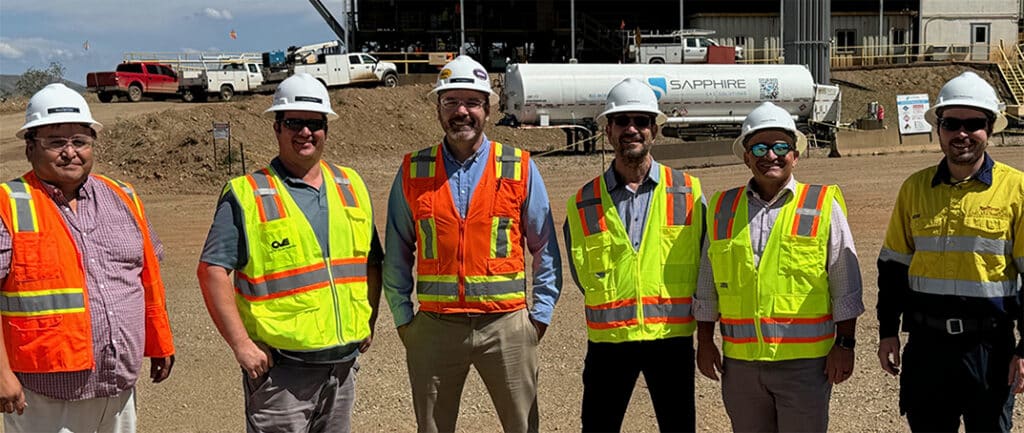
Steve McCabe has a packed schedule. As a Senior Deployment Advisor at Nuton, a Rio Tinto venture, his job is to help bring the company’s groundbreaking heap leaching technology to life.
“It’s a lot of coordination,” Steve said, putting it simply.
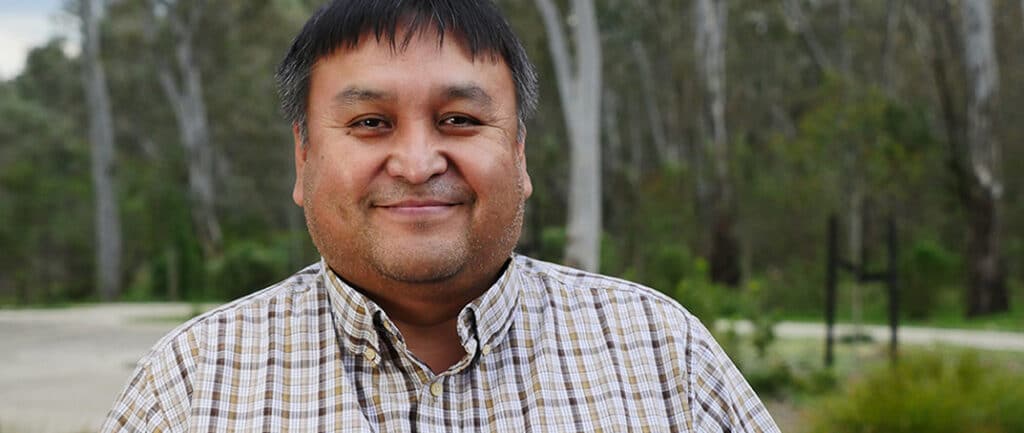
From working with vendors and leading teams to building mobile labs, and analyzing materials, there’s no shortage of moving pieces ahead of Nuton’s first large-scale deployment at Johnson Camp Mine in Arizona.
Lately, Steve’s main focus has been on agglomeration, a critical step in Nuton’s process. In this phase, fine ore particles are bound together using a blend of additives and solutions, improving permeability and ensuring uniform leaching. This step is essential before the material is placed on heap leach pads, where the bio heap leaching process efficiently extracts copper.
Steve’s passion for his work is evident in his deep knowledge and expertise when discussing his daily responsibilities. He is acutely aware of his journey — from an engineer to a metallurgist to a deployment advisor —and he remains grateful for every step. As the first person in his family to attend college, he understands the significance of higher education.
“There are a lot of challenges that tribal students face,” said Steve, a member of the San Carlos Apache Tribe. For many students in his community, college may not seem likely—or even possible. The reasons are multiple and complex. Some students may not know how to take the next step after high school, while others may feel overwhelmed and unsure of what to do if college is in their plans.
“Many Tribal students underestimate themselves,” Steve explains. “They don’t see their potential. But with the right guidance, they can break through those mental barriers and start seeing what’s out there for them”.
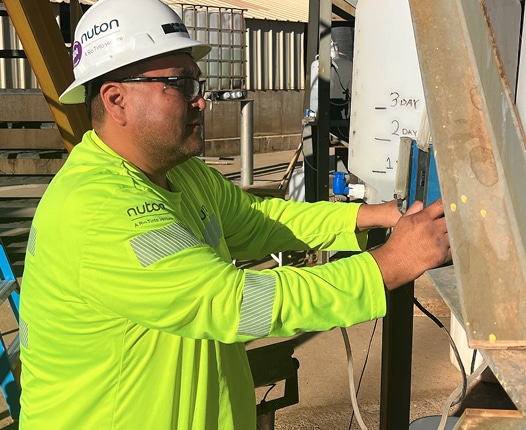
But having a role model—someone who’s been there—can change everything. Before joining Nuton, Steve dedicated years to his Tribe’s education department, assisting students navigate the college process. He continues to mentor high schoolers today, guiding them toward opportunities they might not have realized were within reach.
Steve understands their situation well. When Steve first stepped onto Arizona State University’s campus, he intended to become a nurse. However, after exploring different degree programs, he discovered a passion for chemical engineering. That decision changed his life.
Steve’s education has had a ripple effect—not just for him, but for his entire family. Two of his three children attended Stanford University, and the other recently enrolled at Yale. He doesn’t share this to boast, but to illustrate what’s possible.
“Many Tribal students underestimate themselves,” he explains. “They don’t see their potential. But with the right guidance, they can break through those mental barriers and start seeing what’s out there for them”.
Just like Nuton is working to change the future of copper mining, Steve is working to change the future for students in his community.
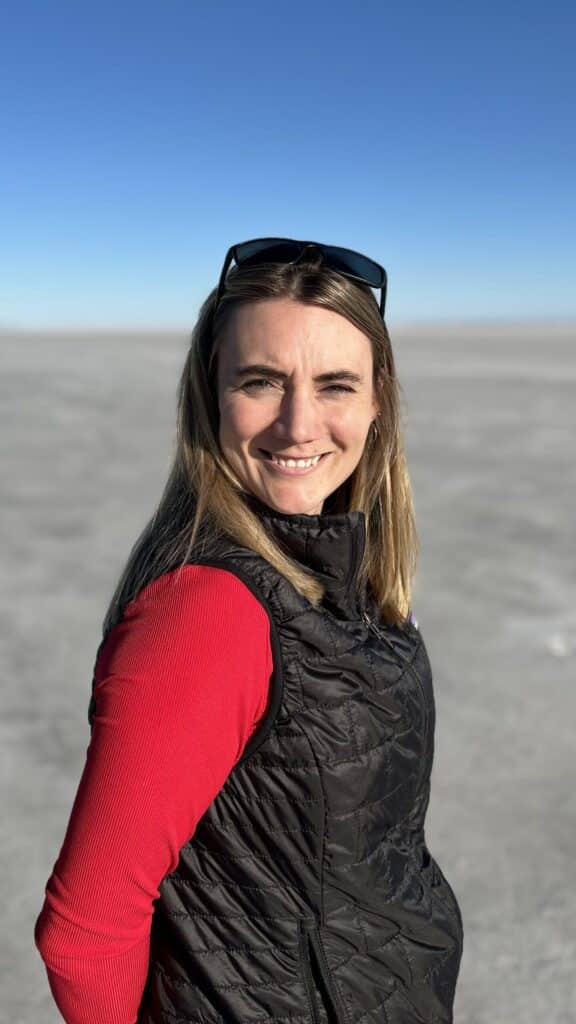
Jeana Ratcliff, who works as a Senior Sustainability Advisor at Nuton, a Rio Tinto venture, was born to be a scientist. Growing up in Montana, she spent her childhood outdoors with her science-minded parents, rock-hounding and learning about geology.
Her curiosity extended indoors, where – she constantly tinkered with electronics, learning the ins and outs of any machine she could get her hands on. Jeana fondly recalls buying an old keyboard, taking it apart, and attempting to reassemble it with her two sisters. Her inquisitive nature and love for learning have persisted into her current role at Nuton.
In celebration of International Day of Women and Girls in Science, Jeana shared insights about her career journey in the sciences, lessons learned along the way, and the advice she would offer others, especially women, considering a career in science.
What does a typical day at Nuton look like for you?
That’s a big question (laughs). Nuton is very dynamic, we’re growing and changing everyday. My focus on sustainability is really Nuton’s overall mission; to produce copper with a positive impact. I’m lucky to be involved in bringing that vision to life.
Most of my work is to directly engage and interface with our partners. I assess where their operations currently are, and how we can explore further opportunities to improve performance through Nuton. We like to challenge the status quo by asking ‘How do we move forward in creating a more sustainable kind of copper supply chain?’
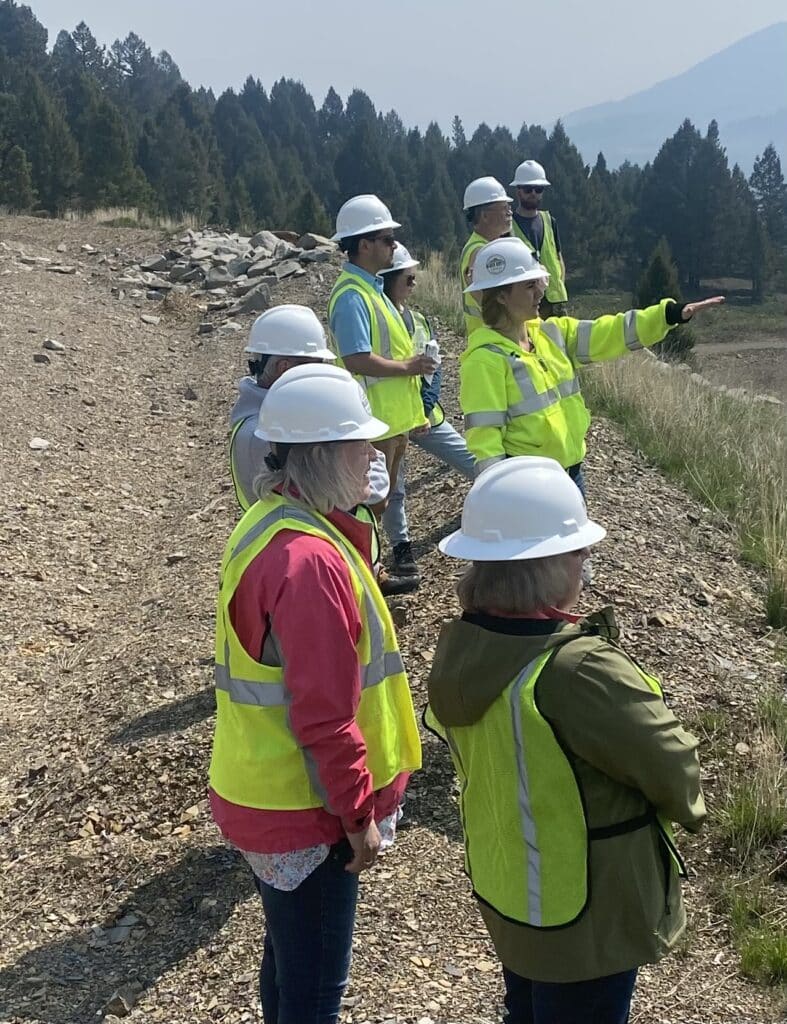
Day to day, my work is quite varied. It’s a good mix of relationship building and data management, and I get to spend some time out in the field every now and then. I enjoy getting out there and being able to see operations, boots on the ground.
Do you like your job?
Yes! Mining is very interesting. You touch every science discipline in this industry. Especially the environmental sciences but also there’s water, biology, chemistry, electrical, mechanical; there’s sort of a piece of every kind of science. I learn a lot every day, which is fun.
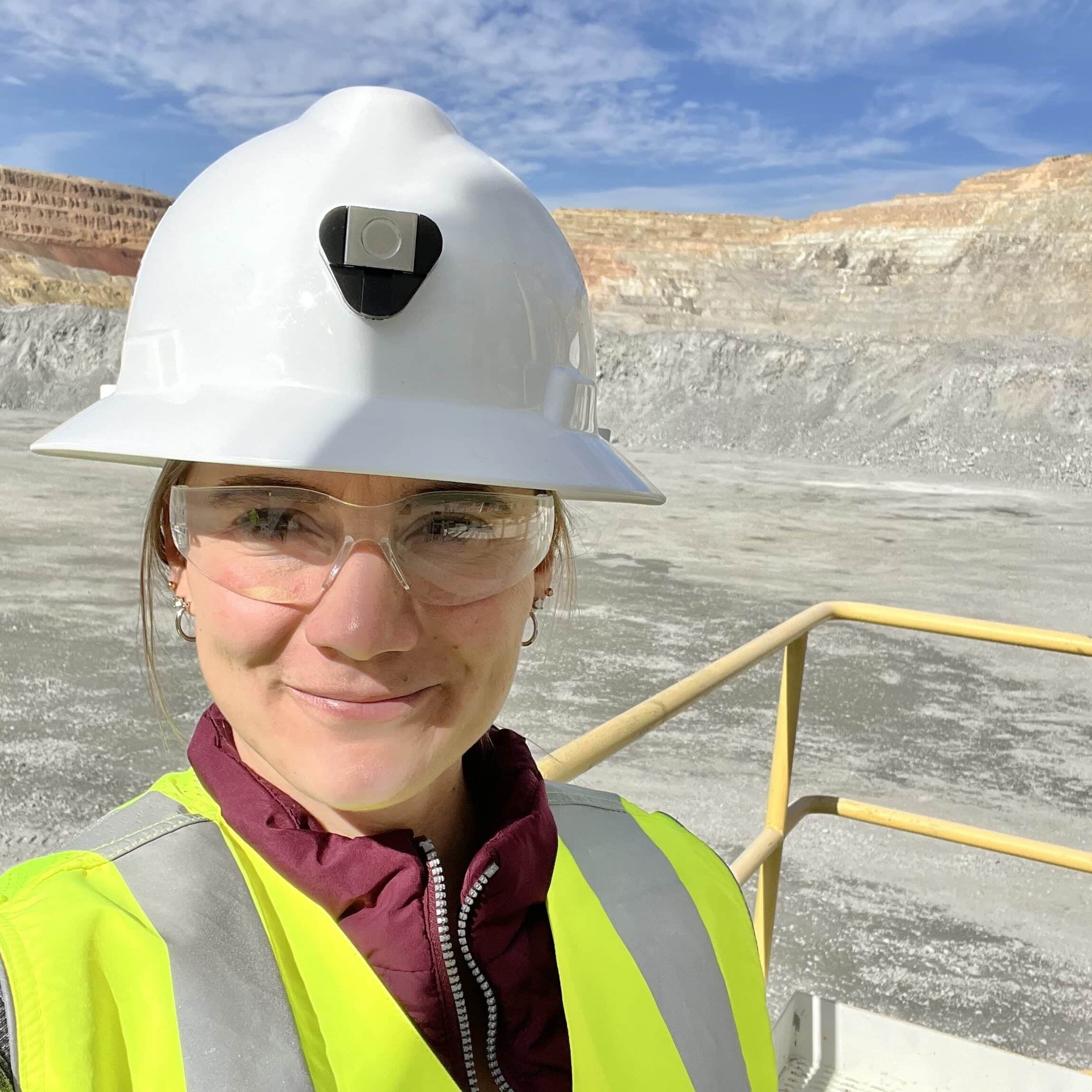
How did you first become interested in this particular field?
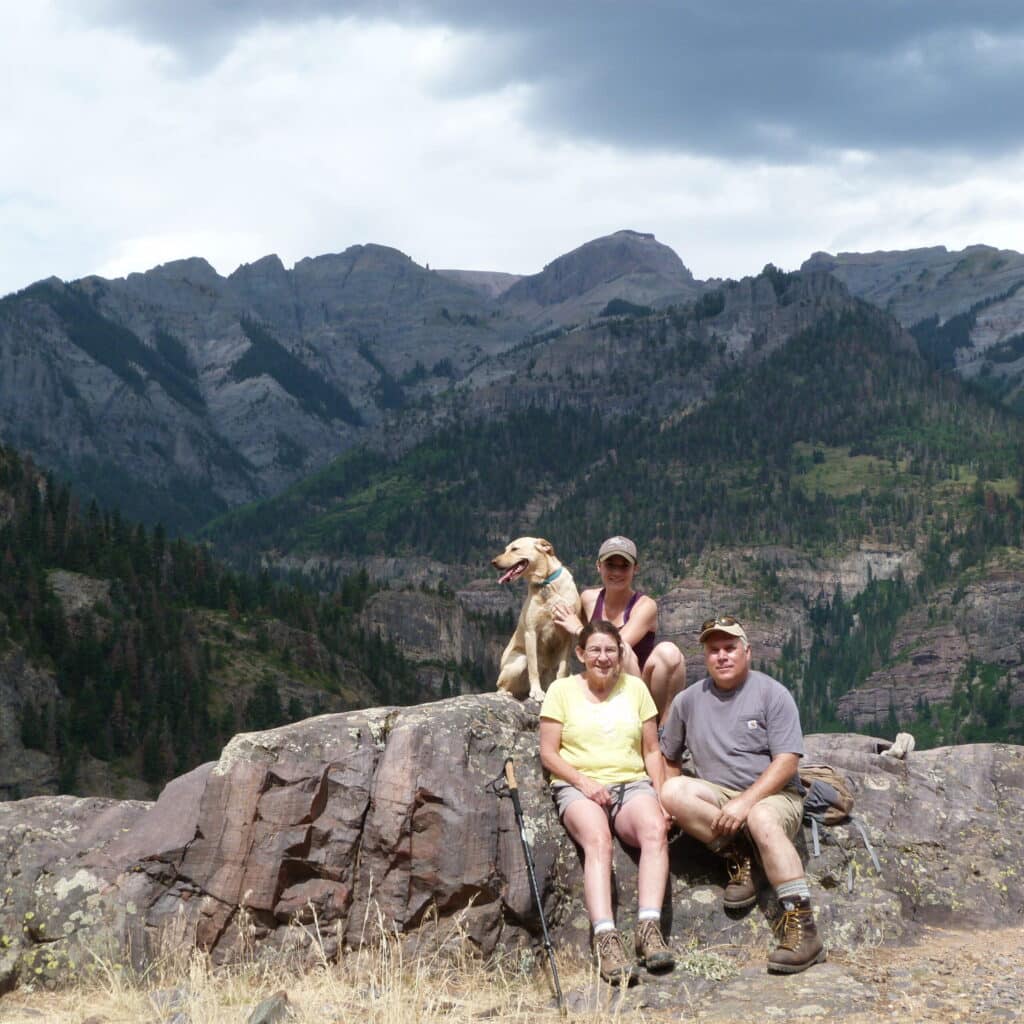
Most of my family is in the mining industry. My dad is a geophysicist, my mom is a geological engineer. It’s funny, when I first got to college I wanted to explore other careers, but I ended up with a degree in civil engineering and land rehabilitation and found my way back to mining. It’s just fun and super dynamic! Much of my interest had to do with the exposure that I had growing up with my family and the things that we did together. This work is fun, I like it, and I feel like I’m good at it.
What kind of science or mining activities did you and your family do when you were young?
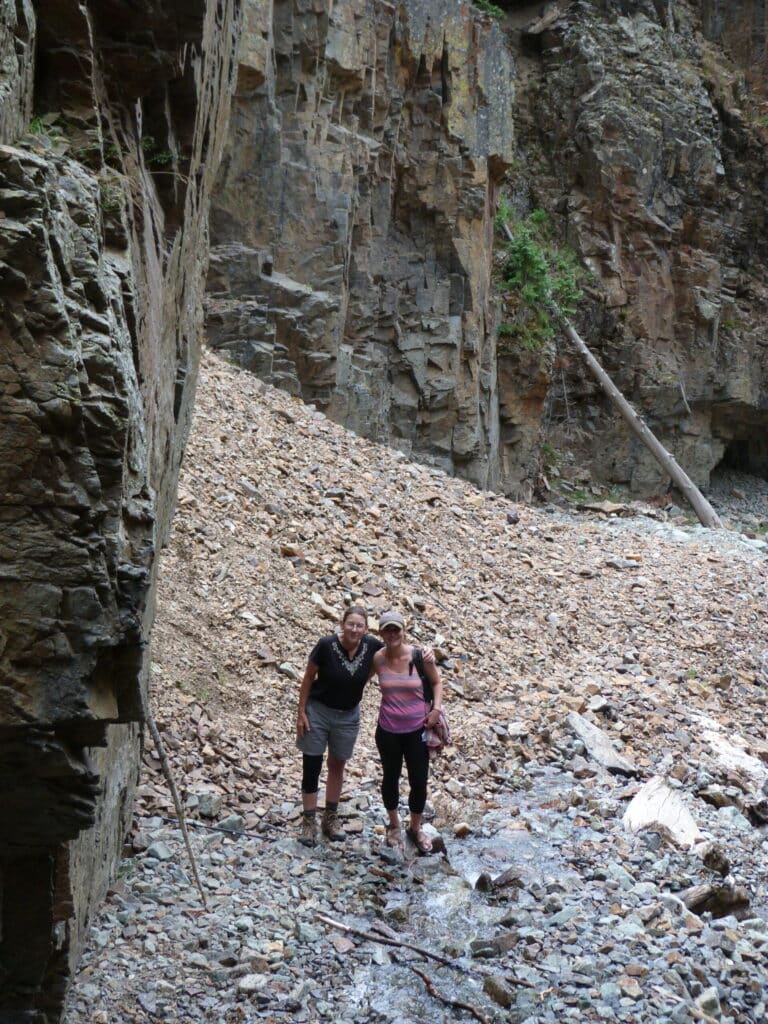
We loved going out to do small-scale prospecting or rock-hounding even. For much of my childhood, my mom was working on mine sites, so having that female role model was huge. What she was doing while being a mother to our family was just a normal thing for me. It didn’t feel like there was a barrier to being a woman doing science-related work. I was like, ‘Oh, Mom’s doing it, so off we go.’
What does it mean to young women to have a role model to look up to in your industry?
I think it’s huge. The classic saying is, if you see it, you can be it. I think that that’s true for a lot of people. Sometimes in the mining industry, there’s still this perception of who does that kind of work. To work in the mining industry does not mean that you’re the guy in the tunnel with the pick axe. Those jobs do exist in some places, but there’s so much more out there.
Having women in leadership positions and different roles can help others understand that there are many different paths to being successful in mining.
What’s your message to young females considering a science-related profession, perhaps in mining specifically?
I think my biggest message is that you don’t have to know everything, and you don’t have to be perfect. A lot of engineers, and scientists, particularly women, struggle with this.
Even as you get further into your career, you should still be learning. There’s a lot of imposter syndrome or fear of asking questions, but I recommend just being curious and allowing yourself to learn more and come up with new ideas. It can feel vulnerable. But realize you don’t have to be 100% perfect at everything to have success.
“News stories of hurricanes and wildfires, droughts and floods are everywhere. It’s easy to feel paralyzed or give up.” Despite the headlines, Cecilia Perla is optimistic. “We need to pay attention to the problem, but also direct our efforts into action rather than despair.”
She’s spent over a decade reshaping copper analysis and decarbonization, and contributing her expertise to governments, universities and NGOs worldwide. And as the United Nations recognizes World Environment Day this June, there’s no better time than now to be enthusiastic about the future of ecosystem restoration.
U.N. Sustainable Development Goals (SDG) Applied to Copper Mining
Perla, the Sustainability VP for Nuton Technologies, sees good things ahead. “We need to double down on humanity’s capacity to change, our creativity and what Hannah Ritchie calls ‘pragmatic optimism’,” she says referring to sustainability data scientist, researcher and author of the 2024 book, Not the End of the World: How Can We Be the First Generation to Build a Sustainable Planet. Recognized by Bill Gates as “eye-opening and essential,” Ritchie’s book points to progress made in lowering carbon emissions, deforestation and air quality. “She’s a glass-half-full type of person, just like me.”
Though for Nuton this is a year-round effort, the U.N.’s World Environment Day in June provides an opportunity to showcase how the mining industry — historically associated with environmental degradation — can become a key innovator for ecosystem restoration.
Nuton’s heap leaching technology, in particular, is a source of great hope in the efforts to find new ways to produce copper with a lower environmental footprint. Nuton embraces a ground-up-to-global mindset for copper extraction driven by a company ethos of sustainability and alignment with the United Nations’ sustainable development goals.
“We must have a vision of what the post-mining land use for the site is and how we get there,” says Perla referring to Nuton’s ambition to accelerate opportunities for land restoration, one of the five pillars of Positive Impact Strategy. “In the big scheme of things, mining is a temporary land use. We should keep an open mind about what it can become once mining concludes.”
Along with land, Nuton’s Positive Impact Strategy encompasses four additional pillars—water, energy, materials, and society. “This year, we are seeing Nuton germinate, having announced the first industrial-scale deployment of our technology at the Johnson Camp Mine, owned and operated by our partner Excelsior Mining,” Perla says. “We will have more exciting news to share as we mature as a venture and show our partners and the market the full value of Nuton technologies.”
The World Environment Day 2024 Motto: #GenerationRestoration
This year’s World Environment Day focuses on land restoration, desertification and drought resilience under the slogan, “Our land. Our future. We are #GenerationRestoration.”
The United Nations sponsors World Environment Day to encourage worldwide awareness and action to protect our environment.
Since 1973, World Environment Day has been the largest global platform for environmental public outreach. Its mission reads, “To keep global warming below 1.5°C [34.7°F] this century, we must cut annual greenhouse gas emissions in half by 2030. Without action, exposure to air pollution beyond safe guidelines will increase by 50 percent within the decade, and plastic waste flowing into aquatic ecosystems will nearly triple by 2040.”
The Future of Sustainable Copper Mining Is Gaining Traction
Nuton is right in line with #GenerationRestoration, this year’s motto for World Environment Day. According to Perla, “Nuton is built on this spirit. Here’s a new technology unlocking opportunities to meet copper demand with a much lighter footprint and less stress on our planet than conventional copper processing technologies.”
As for the future of sustainable copper mining? It´s on its way. Here’s how Nuton’s heap leaching technology already alleviates environmental impact and increases profits.
Lighter Environmental Impact to Meet Copper Demand
It’s simple, according to Perla. “Nuton exists because we need to produce more copper, but we need to do it more sustainably. We focus not only in the what, but also on the how copper is produced.”
“The vast majority of copper comes from primary sulfides, which traditionally go through a process of concentration, smelting and refining,” she says. “Nuton technologies provide an alternative to leaching copper sulfide ores with the help of our carefully cultivated bacteria and unique catalysts and reagents.”
Stronger Economic Impact for Sustainable Copper Mining
Nuton’s ambition to produce copper with a lower carbon footprint, while conserving water, energy, and costs, aligns with the goals of World Environment Day.
World Environment Day 2024 is just one day this summer. But thanks to Perla and the Nuton team, ecosystem restoration and conservation is an everyday ambition.