
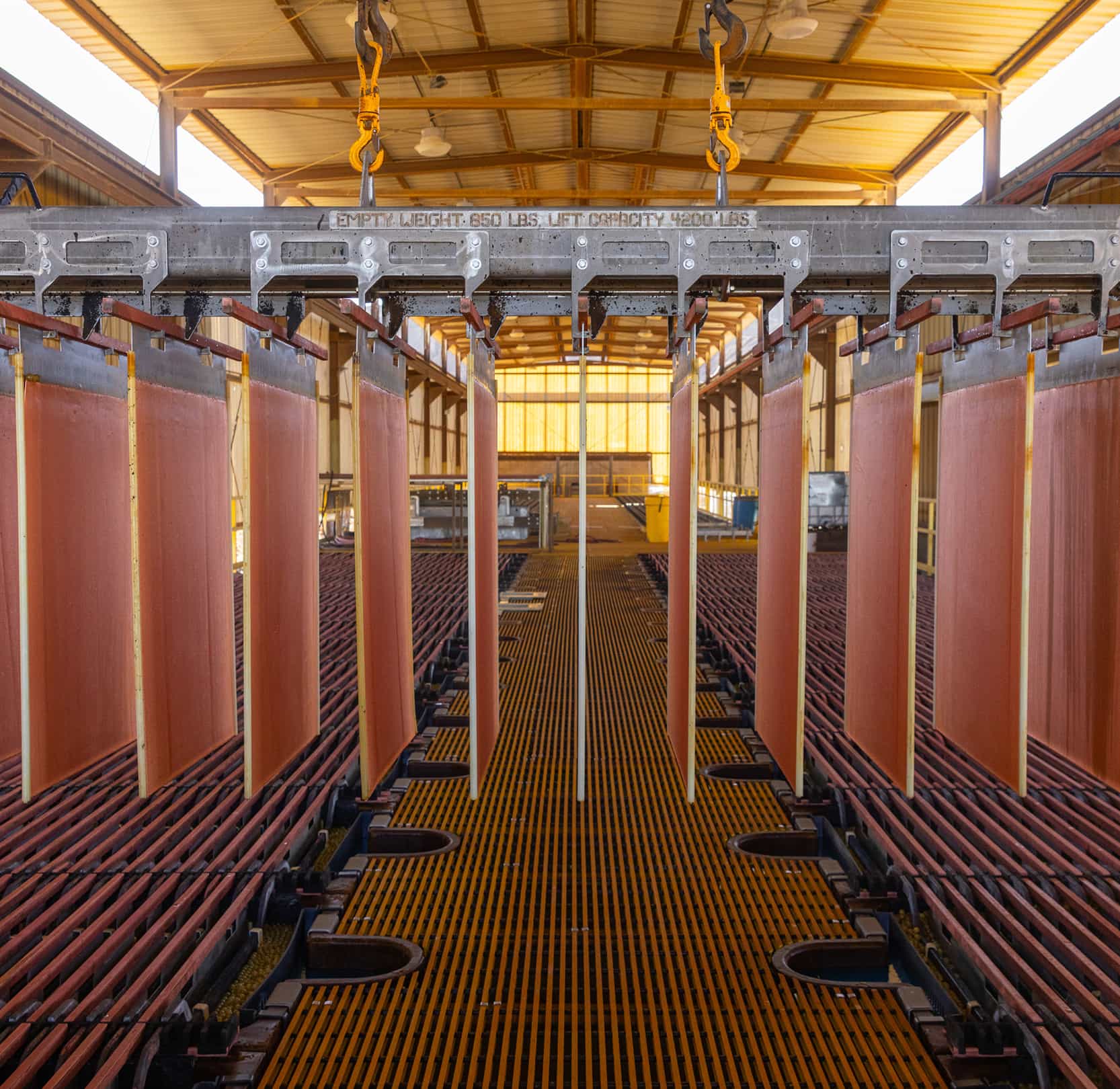
Rio Tinto has successfully produced the first copper from the Johnson Camp mine in Arizona using its Nuton® Technology, marking a pivotal step forward in the development of this innovative copper processing technology.
After more than 30 years of research and development, the first copper cathode using Rio Tinto’s proprietary bioleaching technology, which relies on microorganisms grown on site, was produced at Gunnison Copper’s Johnson Camp mine last month. The deployment involves the design and delivery of a technology package for a heap leach pad targeting production of approximately 30,000 tonnes of refined copper over a four-year demonstration period. Rio Tinto is engaging with several potential customers in the U.S. to support the domestic copper supply chain.
Rio Tinto Copper Chief Executive Katie Jackson said, “This is a breakthrough achievement for our Nuton technology, which is proving that cleaner, faster, and more efficient copper production is possible at an industrial scale. In an industry where projects typically take about 18 years to move from concept to production, Nuton has now proven its ability to do this in just 18 months.
“Nuton has designed a modular system deployed as a technology package integrating biology, chemistry, engineering, and digital tools, allowing it to be rapidly scaled and tailored to different ore bodies, unlocking resources that have historically been considered uneconomic or challenging. We are actively partnering on projects in North and South America to assess the potential for future deployment at additional sites in the coming years.”
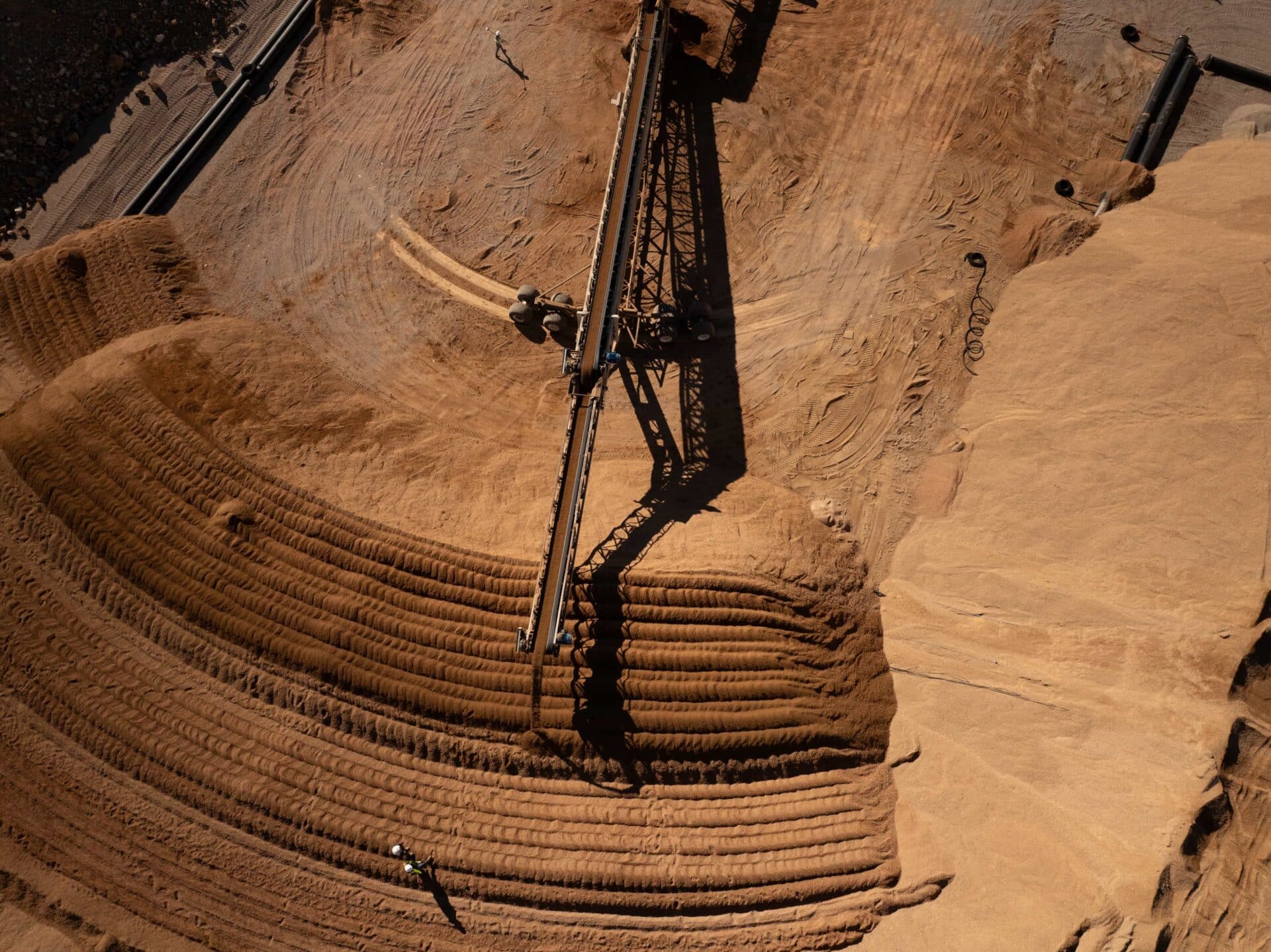
Nuton relies on naturally occurring microorganisms to extract copper from primary sulphide ores, which are traditionally difficult to process. These microbes, grown at large scale in Nuton’s proprietary bioreactors, accelerate the oxidation of minerals in the crushed ore heap, generating heat and enabling copper to dissolve into a leach solution, which is then processed into 99.99% pure copper cathode.
Significantly, processing copper ore with Nuton eliminates the need for concentration, smelting and refining, shortening supply chains and delivering copper cathode at the mine gate. It achieves recovery rates of up to 85% from primary sulphides, the most abundant copper bearing ores in the world.
Nuton can also extend mine life and maximize resource use by extracting value from ores that would otherwise be classified as waste, increasing yield and revenue at both new and existing mines. Its environmental performance is expected to exceed conventional copper processing technologies, with up to 80% less water usage and up to 60% lower carbon emissions than the traditional concentrator route.
At Johnson Camp, Nuton aims to produce copper with the lowest carbon footprint in the U.S. Through the purchase of 134,000 Green-e Energy certified renewable energy certificates, Nuton ensures 100% of the site’s electricity is matched by renewable sources. The copper produced is anticipated to have a mine-to-metal carbon footprint of 0.82-kilogram CO₂-e per kilogram copper, the lowest in the U.S. and substantially lower than the projected 2026 global average of 3.4 kilograms CO₂-e per kilogram among operating copper mines. Additionally, water intensity is anticipated to be 71 litres per kilogram copper, compared to the global average industry estimate of ~130 litres per kilogram of copper production.
Gunnison Copper Chief Executive Officer and President Stephen Twyerould said, “The first production of Nuton copper at Johnson Camp is the culmination of exceptional teamwork between Gunnison Copper and Rio Tinto’s Nuton team. Achieving this level of performance in such a short time frame shows what is possible when innovation, operational excellence, and a shared vision come together. With Nuton copper now entering the U.S. supply chain, this milestone underscores the critical role we can play in strengthening domestic access to cleaner, low-carbon copper.”
While this milestone confirms Nuton’s engineering and operational viability, the next phase will focus on validating long-term technical performance. This includes multi-year testing, independent third-party verification, and internal review by Rio Tinto to ensure consistent recovery rates and environmental performance.

Contacts
Please direct all enquiries to media.enquiries@riotinto.com
| Media Relations, United Kingdom Matthew Klar M +44 7796 630 637 David Outhwaite M +44 7787 597 493 | Media Relations, Australia Matt Chambers M +61 433 525 739 Alyesha Anderson M +61 434 868 118 Rachel Pupazzoni M +61 438 875 469 Bruce Tobin M +61 419 103 454 | Media Relations, Canada Simon Letendre M +1 514 796 4973 Malika Cherry M +1 418 592 7293 Vanessa Damha M +1 514 715 2152 |
| Investor Relations, United Kingdom Rachel Arellano M: +44 7584 609 644 David Ovington M +44 7920 010 978 Laura Brooks M +44 7826 942 797 Weiwei Hu M +44 7825 907 230 | Investor Relations, Australia Tom Gallop M +61 439 353 948 Eddie Gan-Och M +976 95 091 237 | Media Relations, US & Latin America Jesse Riseborough M +1 202 394 9480 |
| Rio Tinto plc 6 St James’s Square London SW1Y 4AD United Kingdom T +44 20 7781 2000 Registered in England No. 719885 | Rio Tinto Limited Level 43, 120 Collins Street Melbourne 3000 Australia T +61 3 9283 3333 Registered in Australia ABN 96 004 458 404 |

From vaccines to copper: a biologist’s unlikely journey into mining
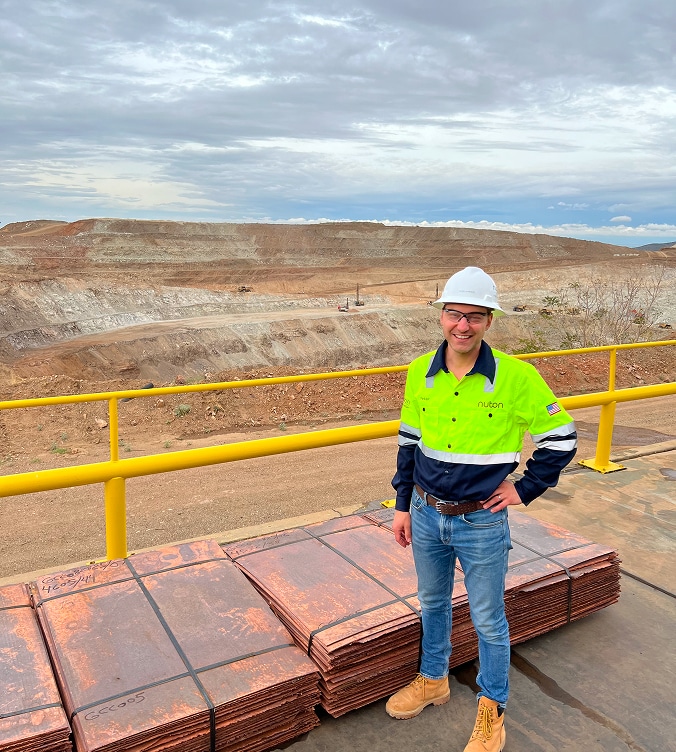
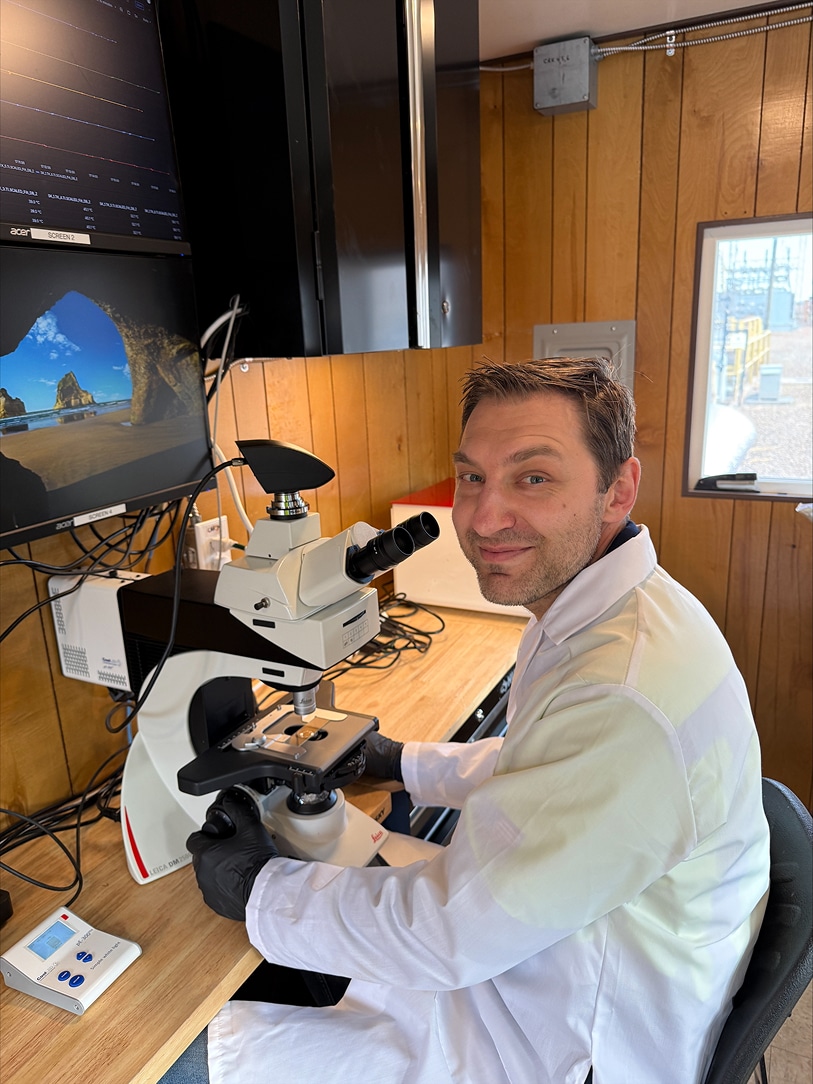
Peter Lavrencic owns a front-row seat to mining history in the making. As Nuton heads towards producing first copper at Gunnison Copper Corp.’s Johnson Camp Mine in Arizona, Peter, Nuton’s Biotechnology Lead, plays a key role in the biological process behind a major milestone: the first industrial-scale demonstration of the proprietary Nuton® Technology.
With first Nuton Copper expected in late 2025, this moment marks a turning point for the venture—validating the Nuton Technology’s proprietary process at scale and paving the way for commercial deployment and a new era in sustainable copper production.
A biochemist’s path to bioleaching
Peter says he’s had an untraditional career path crossing from pharmaceuticals to mining. “It’s incredible how you can transfer your knowledge across what seem like unrelated industries.” He previously worked in the manufacturing, development, and regulatory affairs of vaccines and biological medicines in the pharmaceutical industry. As an ever-curious biochemist and biologist, Peter was so drawn to Nuton’s breakthrough in environmentally conscious copper mining technology that he swapped his career in pharma for one in cutting-edge copper.
Today, Peter’s work bridges the fields of biology and mining. Instead of growing biological medicines in bioreactors for pharmaceuticals, he’s applying similar science to bioleaching in the mining sector. “Mining has historically been seen as a ‘polluting and non-environmentally friendly’ industry, but this new biological process of bioleaching is a positive shift toward a cleaner, more sustainable method whilst delivering a critical resource for our society.”
Microbes that mine: the science behind the heap
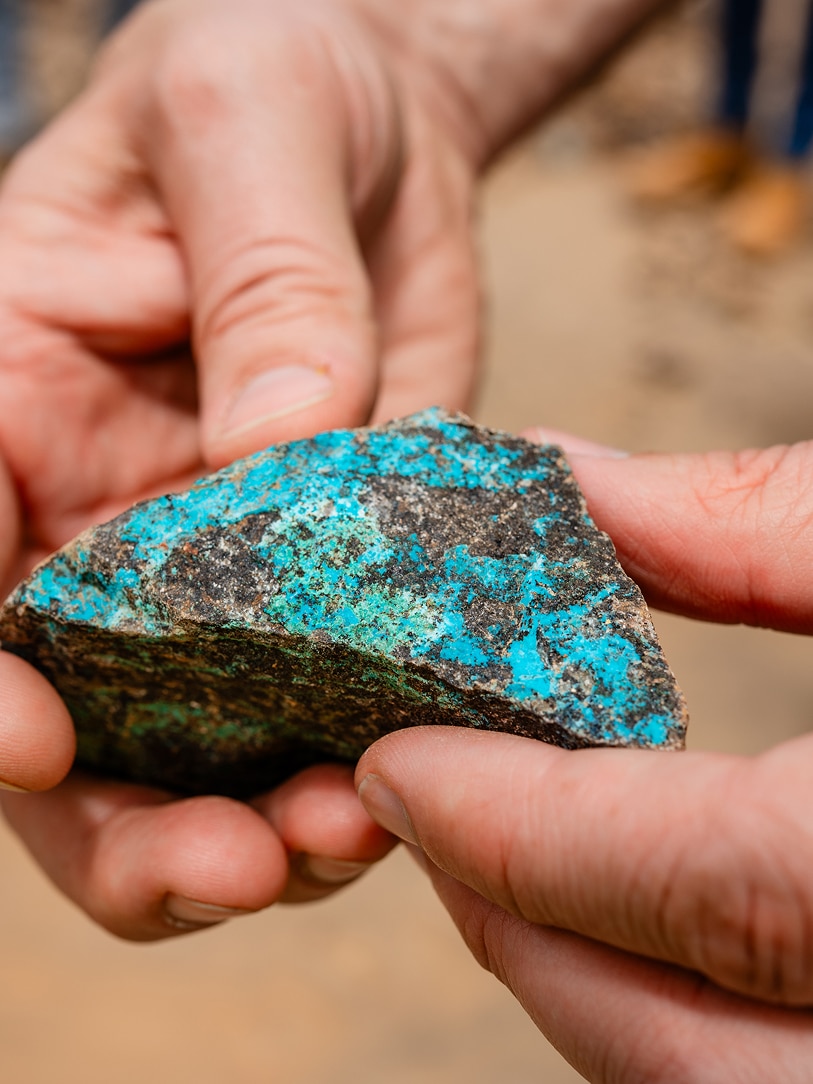
Nuton’s approach to copper mining is game-changing. “Our process is more cost-effective and better for the environment compared to traditional methods mining this ore type.” Moving away from traditional, high-energy-use methods, the Nuton® Technology employs a proprietary biological process using specially curated microorganisms to extract copper from ore.
Massive bioreactors serve as breeding grounds where Nuton’s microbes are born to mine. The facility encompassing the bioreactors – the BIGF for short – is the star bioreactor at Johnson Camp Mine where the microbial magic happens.
“It’s like a maternity ward of microbes, where we provide the incentive and conditions to multiply the right microbes at a maximal rate,” Peter says. These microbes work by “eating” ore components such as iron in the ore, which through a series of chemical reactions releases copper in a process that’s as fascinating as it is revolutionary.
“In the pharmaceutical industry, we grow cells and use their components for the medicine. What we’re doing in mining is somewhat similar. We’ve designed a special composition of microbes to grow in large bioreactors and the cells themselves are the ‘medicine’ for our heap.”
Scaling up sustainably
Peter’s focus is on optimizing the biological side of the process – ensuring the right diversity of microbes is fine-tuned to perform reliably at scale. This is no small feat: the microbes must thrive in harsh mining environments, adapt to changing conditions, and work together in complex chemical reactions.
“People have been mining copper for centuries. Much of the easy-to-mine copper has been mined out. Additionally, the world is more conscious of the environment.” Peter proudly adds that the Nuton Technology isn’t just about producing copper – it’s about doing it more sustainably. These microbes consume carbon dioxide as they work, and water is continuously recycled — turning mining’s biggest environmental challenges into solutions.
Johnson Camp: a launchpad for the future of copper mining
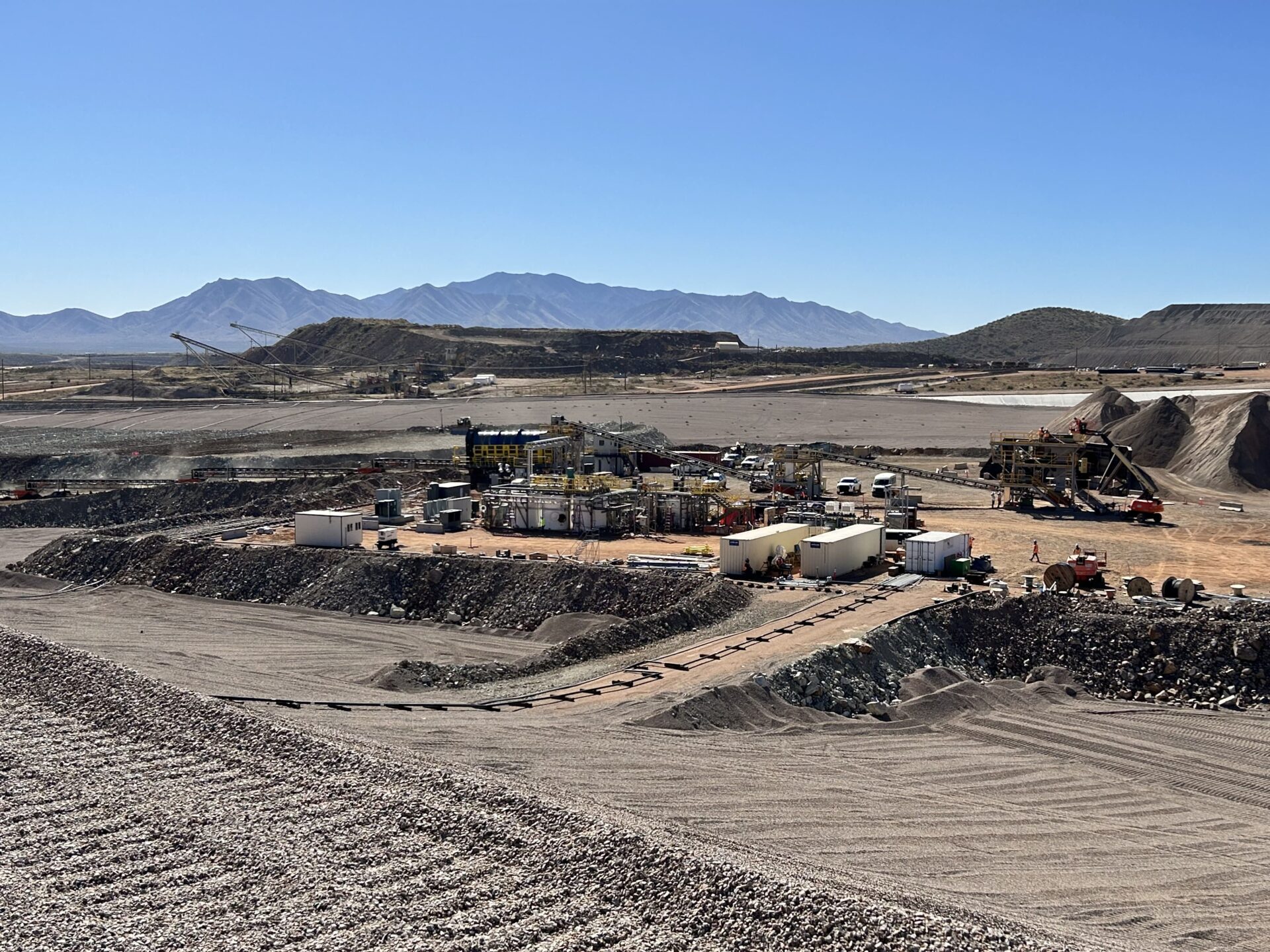
When Peter joined Nuton, everything was still on paper for JCM. Today, Johnson Camp Mine is a buzzing launching pad, with key infrastructure connected and ready for commissioning – the final step before copper production begins.
For him, the biggest reward of the project has been seeing it come off the paper into real life, and the collaboration taking place across Nuton’s team to make this a reality. From mining engineers and metallurgists to AI specialists, the Johnson Camp journey has been powered by a diverse group of experts to bring the Nuton Technology to life.
The learnings and successes from Johnson Camp will inform future deployments across other copper-rich regions, from Arizona to South America.
“I’m a scientist, so new things excite me. I can genuinely use my skills in a unique way.” Peter is thrilled to witness years of biological development come to life at Johnson Camp Mine. In an industry that’s remained largely unchanged for centuries, copper mining is now being revolutionized by the power of biology.
America’s Newest Copper Producer Delivers Ahead of Schedule
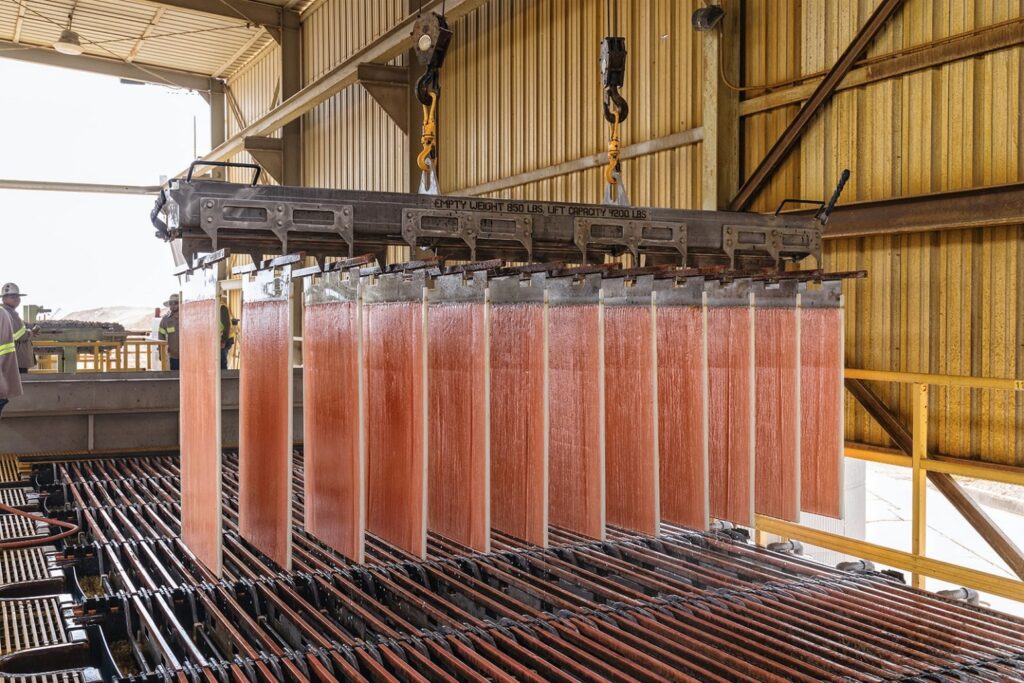
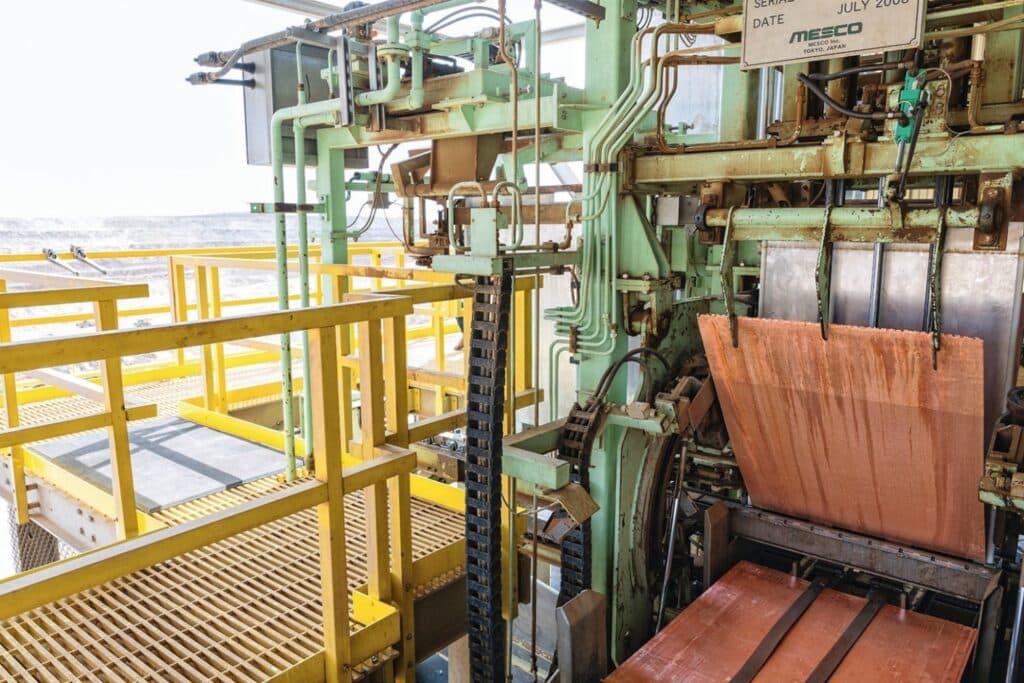
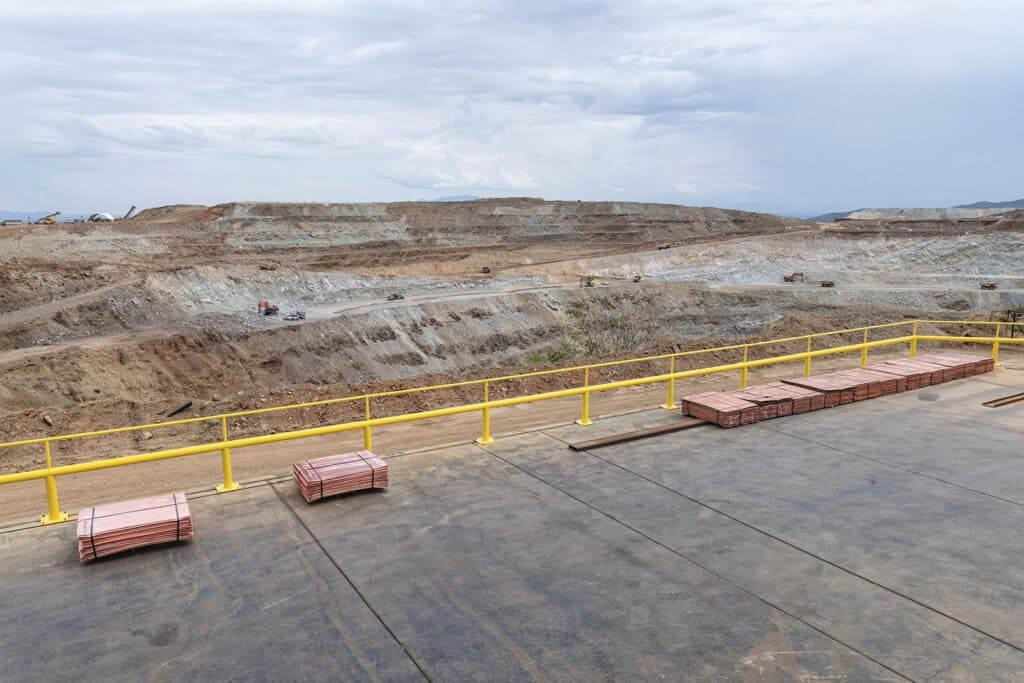
Phoenix, Arizona–(Newsfile Corp. – September 3, 2025) – Gunnison Copper Corp. (TSX: GCU) (OTCQB: GCUMF) (FSE: 3XS0) (“Gunnison” or the “Company”) is thrilled to announce the first production of pure copper cathode from its fully-operational Johnson Camp Mine (“JCM”) in southeast Arizona commenced in the last week of August 2025, establishing Gunnison as the newest American Copper Producer.
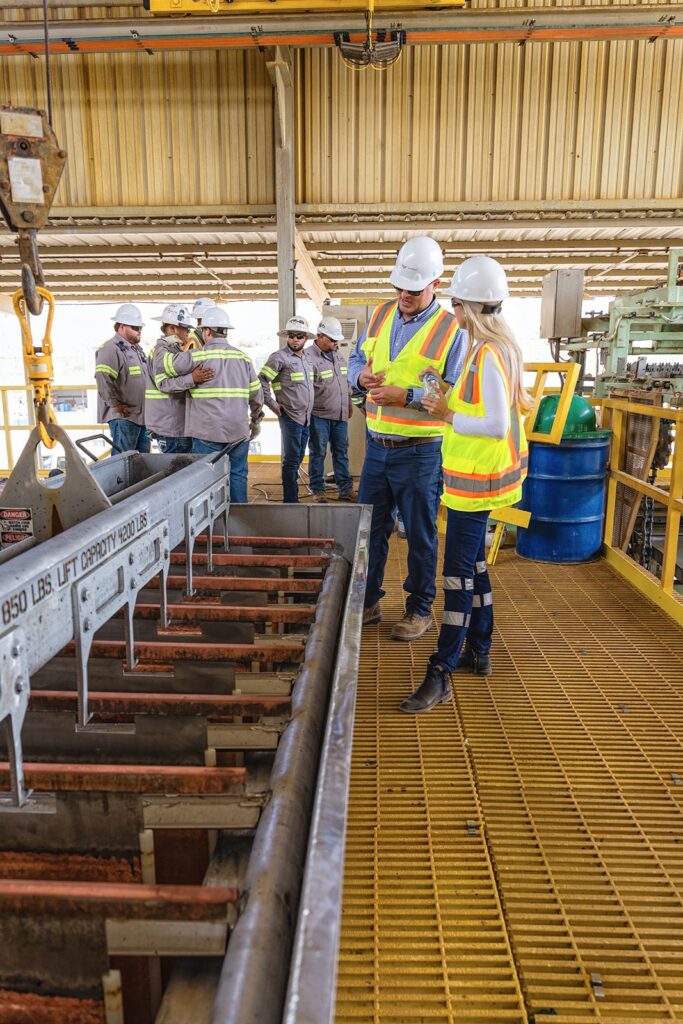
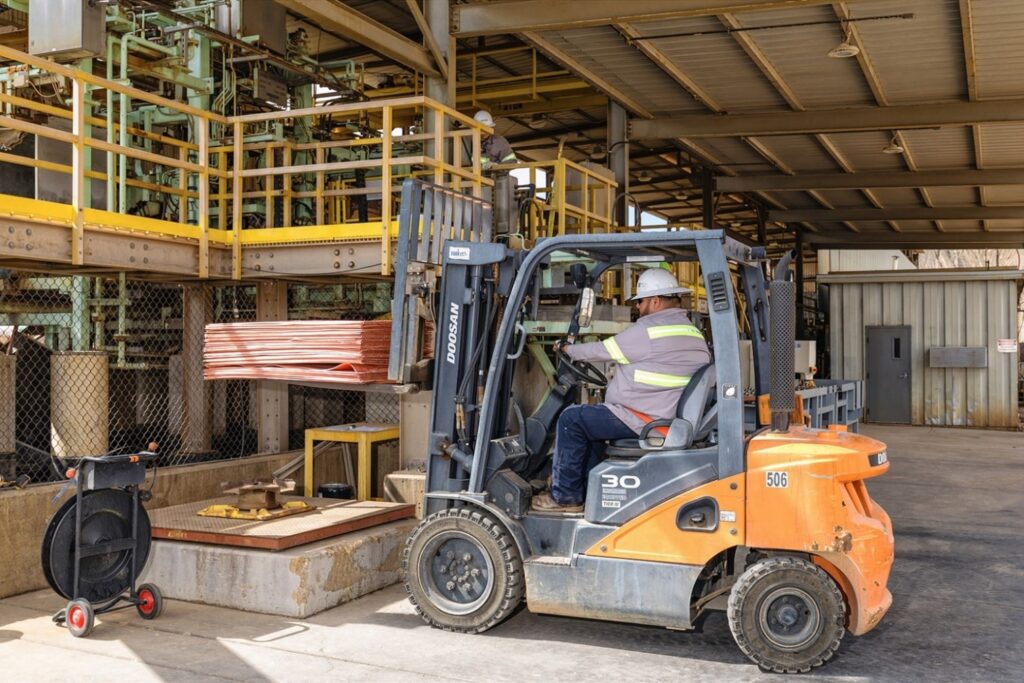
Following the successful start-up of the solvent extraction (SX) and electrowinning (EW) circuit (announced August 11, 2025), copper cathode is now officially in production from run-of-mine (ROM) ore. Gunnison has achieved this critical milestone ahead of schedule, producing Made-in-America copper for domestic sales.
“This is an incredible moment for Gunnison and for U.S. copper supply. To bring Johnson Camp into production ahead of schedule and with an excellent health and safety record is an achievement we’re extremely proud of,” states Stephen Twyerould, Chief Executive Officer and President. “Even more exciting is that we are now producing 100% American-made copper at a time when our nation needs it most. We extend our gratitude to our dedicated team, valued stakeholders, and especially Nuton LLC, a Rio Tinto venture, whose critical support made this possible.”
Nuton is a key strategic and financial partner to Gunnison, supporting the restart of copper production at JCM. With exclusive rights to deploy its proprietary leaching technologies, Nuton is enabling a more sustainable and economically viable path for copper recovery at JCM.
“We congratulate Gunnison Copper and its dedicated team on this important milestone and are proud to support the company’s efforts in revitalizing mining in Arizona,” added Adam Burley, Nuton’s Chief Executive Officer. “We look forward to first copper production using Nuton technologies later this year, unlocking copper through innovation and partnership.”
Key Highlights of the Johnson Camp Mine Commissioning:
- First copper production achieved ahead of schedule, firmly establishing Gunnison as America’s newest copper producer.
- Exceptional safety performance: Commissioning of the ROM copper production circuit completed without incident, underscoring Gunnison’s uncompromising commitment to health and safety excellence.
- Critical U.S. supply: New domestic production strengthens American energy independence, national defense, and advanced manufacturing capabilities.
- Partnerships: Fully funded and supported by Nuton LLC, a Rio Tinto venture, and awarded US$13.9 million in 48C tax credits from the Department of Energy (see Gunnison press release dated January 16, 2025 for additional details).
- Growth trajectory: Ramp-up in progress toward the name plate plant capacity of 25 million pounds of finished copper cathode annually.
ABOUT GUNNISON COPPER
Gunnison Copper Corp. is a multi-asset pure-play copper developer and producer that controls the Cochise Mining District (the district), containing 12 known deposits within an 8 km economic radius, in the Southern Arizona Copper Belt.
Its flagship asset, the Gunnison Copper Project, has a Measured and Indicated Mineral Resource containing over 831.6 million tons with a total copper grade of 0.31% (Measured Mineral Resource of 191.3 million tons at 0.37% and Indicated Mineral Resource of 640.2 million tons at 0.29%), and a preliminary economic assessment (“PEA“) yielding robust economics including an NPV8% of $1.3 Billion, IRR of 20.9%, and payback period of 4.1 years. It is being developed as a conventional operation with open pit mining, heap leach, and SX/EW refinery to produce finished copper cathode on-site with direct rail link.
The PEA is preliminary in nature and includes Inferred Mineral Resources that are considered too speculative geologically to have the economic considerations applied to them that would enable them to be categorized as mineral reserves. There is no certainty that the conclusions reached in the PEA will be realized. Mineral Resources that are not Mineral Reserves do not have demonstrated economic viability.
In addition, Gunnison’s Johnson Camp Asset, which is now in production, is fully funded by Nuton LLC, a Rio Tinto Venture, with a production capacity of up to 25 million lbs of finished copper cathode annually.
Other significant deposits controlled by Gunnison in the district, with potential to be economic satellite feeder deposits for Gunnison Project infrastructure, include Strong and Harris, South Star, and eight other deposits.
For additional information on the Gunnison Project, including the PEA and mineral resource estimate, please refer to the Company’s technical report entitled “Gunnison Project NI 43-101 Technical Report Preliminary Economic Assessment” dated effective November 1, 2024 and available on SEDAR+ at www.sedarplus.ca.
Dr. Stephen Twyerould, Fellow of AUSIMM, President and CEO of the Company is a Qualified Person as defined by NI 43-101. Dr. Twyerould has reviewed and is responsible for the technical information contained in this news release.
For more information on Gunnison, please visit our website at www.GunnisonCopper.com.
ABOUT NUTON
Nuton is an innovative venture that aims to help grow Rio Tinto’s copper business. At the core of Nuton is a portfolio of proprietary copper leaching technologies and capability. Nuton has the potential to economically unlock copper from hard-to-leach ores, including primary sulfides and, in doing so, increase domestic production of critical minerals to support the energy transition. Nuton technologies can achieve market-leading recovery rates and boost copper production in new, ongoing and historical operations, increasing resource utilization and maximizing value.
With significantly lower energy and water needs than conventional concentrating and smelting, and the ability to produce copper cathode at the mine site, Nuton offers a reliable source of domestically produced copper, with a short mine-to-metal supply chain and the ambition to set industry-leading ESG credentials.
One of the key differentiators of Nuton is the ambition to produce the world’s lightest environmental footprint copper while having at least one Positive Impact at each of its deployment sites, across its five pillars: water, energy, land, materials and society.
For more information, please visit https://nuton.tech.
For further information regarding this press release, please contact:
Gunnison Copper Corp.
Concord Place, Suite 300, 2999 North 44th Street, Phoenix, AZ, 85018
Melissa Mackie
T: 647.533.4536
E: info@GunnisonCopper.com
www.GunnisonCopper.com
Cautionary Note Regarding Forward-Looking Information
This news release contains “forward-looking information” concerning anticipated developments and events that may occur in the future. Forward-looking information contained in this news release includes, but is not limited to, statements with respect to: (i) the intention to deploy the Nuton® technology at the Johnson Camp mine and future production therefrom; (ii) the continued funding of the stage 2 work program by Nuton; (iii) the details and expected results of the stage two work program; (iv) timelines for future production and production capacity from the Company’s mineral projects; (v) expectations regarding the timing and amount of 48C tax credits; (vi) the results of the preliminary economic assessment on the Gunnison Project; and (vIi) the exploration and development of the Company’s mineral projects.
In certain cases, forward-looking information can be identified by the use of words such as “plans”, “expects” or “does not expect”, “budget”, “scheduled”, “estimates”, “forecasts”, “intends”, “anticipates” or “does not anticipate”, or “believes”, or variations of such words and phrases or state that certain actions, events or results “may”, “could”, “would”, “might”, “occur” or “be achieved” suggesting future outcomes, or other expectations, beliefs, plans, objectives, assumptions, intentions or statements about future events or performance. Forward-looking information contained in this news release is based on certain factors and assumptions regarding, among other things, Nuton will continue to fund the stage 2 work program, the availability of financing to continue as a going concern and implement the Company’s operational plans, the estimation of mineral resources, the realization of resource and reserve estimates, , copper and other metal prices, the timing and amount of future development expenditures, the estimation of initial and sustaining capital requirements, the estimation of labour and operating costs (including the price of acid), the availability of labour, material and acid supply, receipt of and compliance with necessary regulatory approvals and permits, the estimation of insurance coverage, and assumptions with respect to currency fluctuations, environmental risks, title disputes or claims, and other similar matters. While the Company considers these assumptions to be reasonable based on information currently available to it, they may prove to be incorrect.
Forward-looking information involves known and unknown risks, uncertainties and other factors which may cause the actual results, performance or achievements of the Company to be materially different from any future results, performance or achievements expressed or implied by the forward-looking information. Such factors include risks related to the Company not obtaining adequate financing to continue operations, Nuton failing to continue to fund the stage 2 work program, the breach of debt covenants, risks inherent in the construction and operation of mineral deposits, including risks relating to changes in project parameters as plans continue to be redefined including the possibility that mining operations may not be sustained at the Gunnison Copper Project, risks related to the delay in approval of work plans, variations in mineral resources and reserves, grade or recovery rates, risks relating to the ability to access infrastructure, risks relating to changes in copper and other commodity prices and the worldwide demand for and supply of copper and related products, risks related to increased competition in the market for copper and related products, risks related to current global financial conditions, risks related to current global financial conditions on the Company’s business, uncertainties inherent in the estimation of mineral resources, access and supply risks, risks related to the ability to access acid supply on commercially reasonable terms, reliance on key personnel, operational risks inherent in the conduct of mining activities, including the risk of accidents, labour disputes, increases in capital and operating costs and the risk of delays or increased costs that might be encountered during the construction or mining process, regulatory risks including the risk that permits may not be obtained in a timely fashion or at all, financing, capitalization and liquidity risks, risks related to disputes concerning property titles and interests, environmental risks and the additional risks identified in the “Risk Factors” section of the Company’s reports and filings with applicable Canadian securities regulators.
Although the Company has attempted to identify important factors that could cause actual actions, events or results to differ materially from those described in forward-looking information, there may be other factors that cause actions, events or results not to be as anticipated, estimated or intended. Accordingly, readers should not place undue reliance on forward-looking information. The forward-looking information is made as of the date of this news release. Except as required by applicable securities laws, the Company does not undertake any obligation to publicly update or revise any forward-looking information.

To view the source version of this press release, please visit https://www.newsfilecorp.com/release/264914
Base Case $4.30/lb copper, Post-Tax NPV (7%) $694 million and 14.6% IRR with payback at 6.7 years
Advancing Clear Path to Near-Term Production of U.S. Refined Copper Cathode
Yerington, Nevada–(Newsfile Corp. – August 5, 2025) – Lion Copper and Gold Corp. (CSE: LEO) (OTCQB: LCGMF) (“Lion Copper and Gold” or the “Company“) is pleased to announce the results of the Pre-Feasibility Study (PFS) for its wholly-owned Yerington Copper Project, located in Lyon County, Nevada. The PFS, completed pursuant to the provisions of National Instrument 43-101 – Standards of Disclosure for Mineral Projects (“NI 43-101”), demonstrates and confirms the Project’s potential as a significant refined copper cathode producer in the United States in the heart of the Yerington Copper District. The PFS was prepared by Samuel Engineering Inc., with input from independent Qualified Persons (QPs), and was fully funded by the Company’s strategic partner, Nuton LLC, a Rio Tinto venture.
In this news release, all dollar amounts are in United States dollars (“$”) and imperial units are utilized.
Highlights
Sizeable and scalable open pit heap leach project
- Average annual production of 120 million pounds of refined copper cathode over a 12-year mine life, with a peak of 151 million pounds in Years 5-7.
- Proven and Probable Reserves of 506.5 million tons at 0.21% CuT, containing 2.14 billion pounds of copper.
- Excluding reserves, an additional Measured & Indicated Resource of 293.3 million tons at 0.18% CuT, containing 989 million pounds of copper and an additional Inferred Resource of 158.1 million tons at 0.14% CuT, containing 443.4 million pounds of copper.
- Strong copper recovery performance with an average of 67.4% LOM copper recovery from low-cost heap leaching – 73.2% copper recovery from sulfides using Nuton leach technology and 60% from oxides in a conventional heap leach.
- Extensive land holdings include patented and unpatented mining claims as well as private land adjacent to other significant copper deposits.
- The Project plans to spend approximately $70M to treat 43,000 acre-feet of Yerington Pit Lake water and release this water to the environment for multiple beneficial stakeholder uses in the Mason Valley.
- Benefits of the Project include utilizing disturbed land for mine infrastructure, zero discharge of water from copper processing operations, lower carbon intensity, and efficiently delivering copper cathode directly into U.S. supply chains.
John Banning, CEO of the Company, states, “With growing domestic demand for refined copper, we are pleased to announce the completion of the Pre-Feasibility Study for our Yerington Copper Project, a brownfield asset in Nevada, planned to produce 120 million pounds of refined copper cathode annually over a 12-year mine life. This PFS showcases Lion Copper and Gold’s strategic advantage in the Yerington Copper District, bolstered by secured water rights, the Bear Deposit’s significant potential, strategic land control, and proximity to major neighboring copper projects, positioning us to deliver significant shareholder value and strengthen North America’s critical minerals supply chain.”
Economics
- Base Case $4.30/lb copper, Post-Tax NPV (7%) $694 million and 14.6% IRR with payback at 6.7 years.
- Initial Capital: $724 million, including mine development, heap leach pads, SX/EW plant, acid plant and related infrastructure.
- Base Case NPV-to-Initial Capital Ratio of 0.96.
- Operating Costs: Cash cost (C1)1 of $1.92 per pound of copper.
- All-in Sustaining Costs (AISC)1 of $2.67 per pound of copper.
- Base Case Capital Intensity* of $12,044/tpa.
* Initial capital expenditures divided by average annual copper production for mine life
Copper Price Sensitivity
| Sensitivity | Copper Price | Pre-Tax | Post-Tax | ||||
| (%) /item | Cu/lb | NPV(7%) | IRR | Payback | NPV(7%) | IRR | Payback |
| $M | % | Years | $M | % | Years | ||
| -25% | $3.23 | $111 | 8% | 8.9 | ($21) | 7% | N/A |
| -20% | $3.44 | $284 | 10% | 8.2 | $122 | 8% | 8.6 |
| -15% | $3.66 | $457 | 12% | 7.6 | $266 | 10% | 7.9 |
| -10% | $3.87 | $629 | 14% | 7.1 | $410 | 12% | 7.4 |
| -5% | $4.09 | $802 | 15% | 6.7 | $553 | 13% | 7.0 |
| Base Case | $4.30 | $975 | 17% | 6.4 | $694 | 15% | 6.7 |
| 5% | $4.52 | $1,148 | 19% | 6.1 | $836 | 16% | 6.4 |
| 10% | $4.73 | $1,321 | 20% | 5.8 | $976 | 18% | 6.1 |
| 15% | $4.95 | $1,494 | 22% | 5.5 | $1,116 | 19% | 5.9 |
| 20% | $5.16 | $1,667 | 23% | 5.3 | $1,254 | 20% | 5.6 |
| 25% | $5.38 | $1,840 | 25% | 5.0 | $1,390 | 22% | 5.4 |
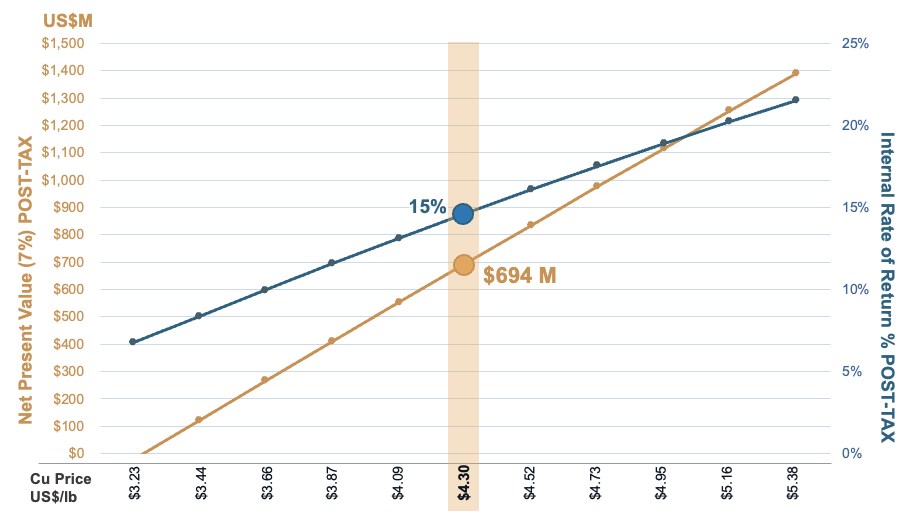
Figure 1. Copper Price Sensitivity After Tax
To view an enhanced version of this graphic, please visit:
https://images.newsfilecorp.com/files/1020/261234_fca0639ac4479bca_001full.jpg
Significantly Derisked Project at PFS level with Resource Upside Potential
- Strong reserve and resource confidence with 60% of the resources in Proven and Probable and 88% Measured and Indicated categories with over 125 miles (660,000 ft) of drilling in 1,662 drill holes across the Yerington and MacArthur deposits.
- +10 years of extensive metallurgical testwork and modelling completed including over 50 column tests thoroughly assessing performance characteristics across numerous composites and configurations to optimize reliable metallurgical outcomes.
- 6,014 acre-feet/year of secured water rights permitted for mining use for the life of the project.
- Regional infrastructure is in place to support a major mine, with rail, power, highway, airport and proximity to skilled workforce.
- Clear path to permitting with strong eligibility potential for Fast-41 streamlined permitting process.
Strategically Important U.S. Copper Production
- Heap leach operation with solvent extraction-electrowinning (SX/EW), enhanced by Nuton’s proprietary sulfide leaching technology, achieving a project average of 73.2% copper recovery from sulfide ore.
- Run of mine (ROM) oxide ore heap leached with recoveries at the project of 60%.
- On-site production of refined cathode copper for use in U.S. supply chains.
Project Overview
The Yerington Copper Project integrates the Yerington and MacArthur deposits, located in Nevada’s Yerington Copper District, a historic mining region with excellent infrastructure (rail, power, U.S. Highway 95A). The Project benefits from 100% Lion Copper and Gold owned water rights of 6,014 acre-feet/year permitted for mining use for the life of the project and de-risked permitting and mine development. The PFS envisions conventional open-pit mines feeding a heap leach operation, producing LME Grade A copper cathode via SX/EW, with Nuton’s technology enhancing sulfide recoveries. The Project plans to create approximately 400 direct jobs during construction and up to 250 permanent jobs during operations, contributing significantly to the local and state economies.
The Project offers significant environmental benefits compared to traditional copper production. Benefits of the Project include utilizing previously disturbed project facilities area suitable for new mine infrastructure, using pit water for multiple beneficial uses in Mason Valley, zero discharge of water from copper processing operations, lower carbon intensity, and efficiently delivering refined copper cathode directly into U.S. supply chains. These environmental benefits are an important part of the Project being a partner in the Mason Valley to foster growth and diversity in the local economy together with the local stakeholders.
The Project is approximately 70 miles by road from Reno, Nevada, 50 miles south of Tahoe-Reno Industrial Center, and 10 miles from the nearest rail spur of Wabuska. The Project includes both the historic Yerington and MacArthur open pit mines with shared mineral processing infrastructure for operational efficiency. The Project is bordered on the east by the town of Yerington, Nevada, which provides access via a network of paved and gravel roads that were used during previous mining operations.
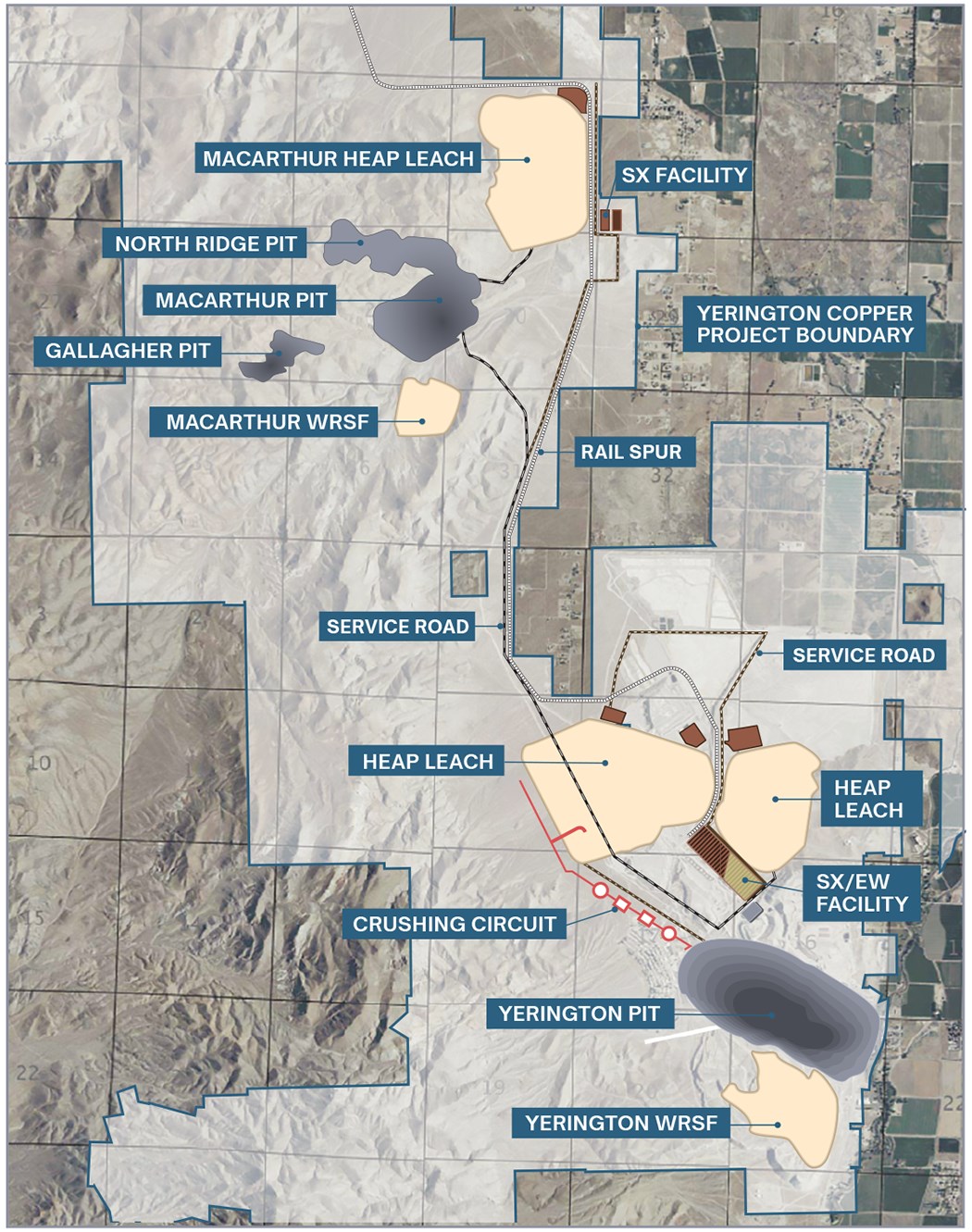
Figure 2. Yerington Copper Project Overview
To view an enhanced version of this graphic, please visit:
https://images.newsfilecorp.com/files/1020/261234_fca0639ac4479bca_002full.jpg
Base Case Economics – Based on $4.30/lb Copper Price
| Parameter | Unit | Pre-tax | Post-tax |
| Net Revenue | $USM | 2,914 | 2,315 |
| NPV (7%) (LOM) | $USM | $975 | $694 |
| IRR (LOM) | % | 16.9% | 14.6% |
| Payback | Years | 6.4 | 6.7 |
| Cash Costs1 | $US/lb payable | $1.92 | |
| AISC1 | $US/lb payable | $2.67 | |
| Copper – Payable | Mlbs | 1,443 | |
| Mine Life | Years | 12 | |
| Average Annual Production LOM | Mlbs | 120 | |
| LOM Production | tons | 721,352 | |
1 Total cash cost and AISC are non-GAAP measures and include royalties payable. See reference below regarding non-IFRS measures.
NPV Sensitivities
The sensitivity analysis provides a range of results for the Project when key parameters are varied from their base-case values. The NPV estimate is most sensitive to the copper price.
The PFS uses a base case copper price of $4.30/lb, using the COMEX two-year trailing average copper prices. Project sensitivities were completed on the copper price with a range of $3.25/lb through $5.38/lb:
- At $3.23/lb: NPV(7%) -$21M IRR 7% (Post-Tax).
- At $5.38/lb: NPV(7%) $1.4B, IRR 22% (Post-Tax).
Capital and Operating Costs
The initial capital, expensed over the first 3 years of the Project, amounts to $724 million. The sustaining capital over the remainder of LOM amounts to $1,008 million. A breakdown of capital is presented in the tables below.
| Operating Costs | $USM | $/t Feed | $/lb payable |
| Open Pit Mining | 1,698 | 3.35 | 1.18 |
| Processing | 947 | 1.87 | 0.66 |
| G&A | 124 | 0.24 | 0.09 |
| Total | 2,769 | 5.47 | 1.92 |
| Capital Costs | ||
| Initial Capital | $USM | 724 |
| Sustaining Capital | $USM | 1,008 |
| Total Capital | $USM | 1,732 |
| $/lb payable | 1.20 | |
Reserves and Resources
The PFS includes the first Mineral Reserve estimate for the Yerington Copper Project. The PFS is based on the Mineral Reserves only and the reserve estimate is based on pit designs using a copper price of $3.90/lb, with cut-off grades ranging from 0.03 to 0.07% CuT for oxide material and 0.09% CuT for sulfide material.
Mineral Reserves
| Pit Area | Proven | Probable | Total | ||||||
| Ore Type | Tons (kt) | Grade (Cu%) | Copper Mlbs | Tons (kt) | Grade (Cu%) | Copper Mlbs | Tons (kt) | Grade (Cu%) | Copper Mlbs |
| Yerington Pit/VLT | |||||||||
| Oxide | 34,295 | 0.22 | 148.3 | 73,681 | 0.13 | 193.1 | 107,976 | 0.16 | 341.5 |
| Sulfide | 81,037 | 0.30 | 481.1 | 152,761 | 0.24 | 732.3 | 233,798 | 0.26 | 1,213.3 |
| MacArthur Area | |||||||||
| Oxide | 110,224 | 0.19 | 411.7 | 54,553 | 0.16 | 173.5 | 164,777 | 0.18 | 585.2 |
| Sulfide | – | – | – | – | – | ||||
| Total Oxide | 144,519 | 0.19 | 560.0 | 128,234 | 0.14 | 366.7 | 272,753 | 0.17 | 926.7 |
| Total Sulfide | 81,037 | 0.30 | 481.1 | 152,761 | 0.24 | 732.3 | 233,798 | 0.26 | 1,213.3 |
| Total Reserve | 225,556 | 0.23 | 1,041.1 | 280,995 | 0.20 | 1,099.0 | 506,551 | 0.21 | 2,140.0 |
Note: This Mineral Reserve estimate has an effective date of May 31, 2025, and is based on the mineral resource estimates for Yerington and VLT dated March 17, 2025 by AGP Mining Consultants Inc. and MacArthur Area Pits dated March 17, 2025 by Independent Mining Consultants Inc. The Mineral Reserve estimate was completed under the supervision of Gordon Zurowski, P.Eng. of AGP, who is a Qualified Person as defined under NI 43-101. Mineral Reserves are stated within the final pit designs based on a $3.90/lb copper price.
- The copper cutoff grades used were:
Yerington Pit – 0.05% copper (oxide ROM), 0.09% copper (sulfide)
Vat Leach Tailings (VLT) Pit – 0.03% copper (oxide ROM)
MacArthur – 0.05% copper (oxide ROM)
Gallagher Pit – 0.07% copper (oxide ROM)
North Ridge Pit – 0.06% copper (oxide ROM)
- Open pit mining costs varied by area and elevation with waste of $2.53/t, oxide material at $2.49/t and sulfide at $2.22/t. Incremental costs of $0.027/25ft bench were applied below the 4225 foot elevation for waste and oxide and 0.024/t for sulfide material below the 4225 foot elevation.
- Processing costs were based on the use of an acid plant at site with crushing for sulfide material. The processing costs by pit area were:
Yerington Pit – $2.00/t ore (oxide ROM), $4.44/t (sulfide)
VLT Pit – $1.34/t ore (oxide ROM)
MacArthur – $1.67/t ore (oxide ROM)
Gallagher Pit – $2.14/t ore (oxide ROM)
North Ridge Pit – $1.73/t ore (oxide ROM)
G&A costs were $0.49/t ore.
- Process copper recoveries varied by material and area and were as follows:
Yerington Pit – 70% (oxide ROM), 74% (sulfide)
VLT Pit – 75% (oxide ROM)
MacArthur – 55% (oxide ROM)
Gallagher Pit – 54% (oxide ROM)
North Ridge Pit – 55% (oxide ROM)
Mineral Resources (Inclusive of Mineral Reserves)
| Pit Area | Measured | Indicated | Measured + Indicated | ||||||
| Resource Type | Tons (kt) | Grade (Cu%) | Copper Mlbs | Tons (kt) | Grade (Cu%) | Copper Mlbs | Tons (kt) | Grade (Cu%) | Copper Mlbs |
| Yerington Pit/VLT | |||||||||
| Oxide | 37,531 | 0.21 | 157.6 | 96,556 | 0.13 | 257.9 | 134,087 | 0.16 | 417.0 |
| Sulfide | 84,163 | 0.30 | 505.0 | 263,230 | 0.22 | 1,158.2 | 347,393 | 0.24 | 1,663.2 |
| MacArthur Area | |||||||||
| Oxide | 163,333 | 0.18 | 577.8 | 155,086 | 0.15 | 471.6 | 318,419 | 0.17 | 1,049.4 |
| Sulfide | – | – | – | – | – | – | – | – | – |
| Total | |||||||||
| Oxide Total | 200,864 | 0.19 | 735.4 | 251,642 | 0.15 | 729.4 | 452,506 | 0.16 | 1,464.9 |
| Sulfide Total | 84,163 | 0.30 | 505.0 | 263,230 | 0.22 | 1,158.2 | 347,393 | 0.24 | 1,663.2 |
| Total | 285,027 | 0.22 | 1,240.4 | 514,872 | 0.18 | 1,887.6 | 799,899 | 0.20 | 3,129.0 |
| Pit Area | Inferred | ||
| Resource Type | Tons (kt) | Grade (Cu %) | Copper Mlbs |
| Yerington Pit/VLT | |||
| Oxide | 67,338 | 0.11 | 145.8 |
| Sulfide | 67,576 | 0.17 | 229.8 |
| MacArthur Area | |||
| Oxide | 23,169 | 0.15 | 67.9 |
| Sulfide | – | – | – |
| Total | |||
| Oxide Total | 90,507 | 0.12 | 213.6 |
| Sulfide Total | 67,576 | 0.17 | 229.8 |
| Total | 158,083 | 0.14 | 443.4 |
Notes:
- Mineral Resources are reported in situ for the Yerington Pit and MacArthur Pit area and the effective date is March 17, 2025. Mineral Resources for the VLT are surficial and the effective date is March 17, 2025. Mineral Resources that are not Mineral Reserves do not have demonstrated economic viability. There is no certainty that all or any part of the Mineral Resource estimate will be converted into Mineral Reserves. The Mineral Resource Estimate of Yerington and the VLT was performed by Mr. Tim Maunula, P. Geo of T. Maunula & Associates Consulting and the MacArthur Area Pits by Mr. Herb Welhener, MMSA-QPM, Vice President of Independent Mining Consultants Inc. Both responsible parties are both Qualified Persons under 43-101 standards. All figures are rounded to reflect the relative accuracy of the estimates and totals may not add correctly.
- Mineral Resources of the Yerington pit area are reported within a conceptual pit shell that used the following input parameters: a variable break-even economic cut-off grade of 0.04 % TCu and 0.08% TCu, for oxide and sulfide material respectively, based on assumptions of a net copper price of US$4.22 per pound (after smelting, refining, transportation, and royalty charges), 70% recovery in oxide material, 74% recovery in sulfide material, base mining costs of $2.49/st for oxide and $2.22/st for sulfide, and processing plus G&A costs of $2.00/st for oxide and $4.44/st for sulfide.
- Mineral Resources of the VLT are reported within a conceptual pit shell that used the following input parameters: a break-even cut-off grade of 0.03 % TCu based on assumptions of a net copper price of US$4.22 per pound (after smelting, refining, transportation and royalty charges) and 75% recovery in oxide material.
- Mineral Resources of the MacArthur Pit area are reported within a conceptual pit shell that used the following input parameters: a break-even cut-off grade of 0.05 % for the MacArthur pit, 0.07 % TCu for the Gallagher pit, and 0.06 % TCu for the North Ridge pit. Metal price of $4.22 per pound (after smelting, refining, transportation, and royalty charges); process costs between $1.67 and $2.14/st; and base mining costs for heap tonnage of $2.49/st and $2.53/st for waste,
- Recovery of Total Copper in redox zones of leach cap, overburden, oxide and mixed: MacArthur domain 55%, North Ridge domain 53%, Gallagher domain 54%.
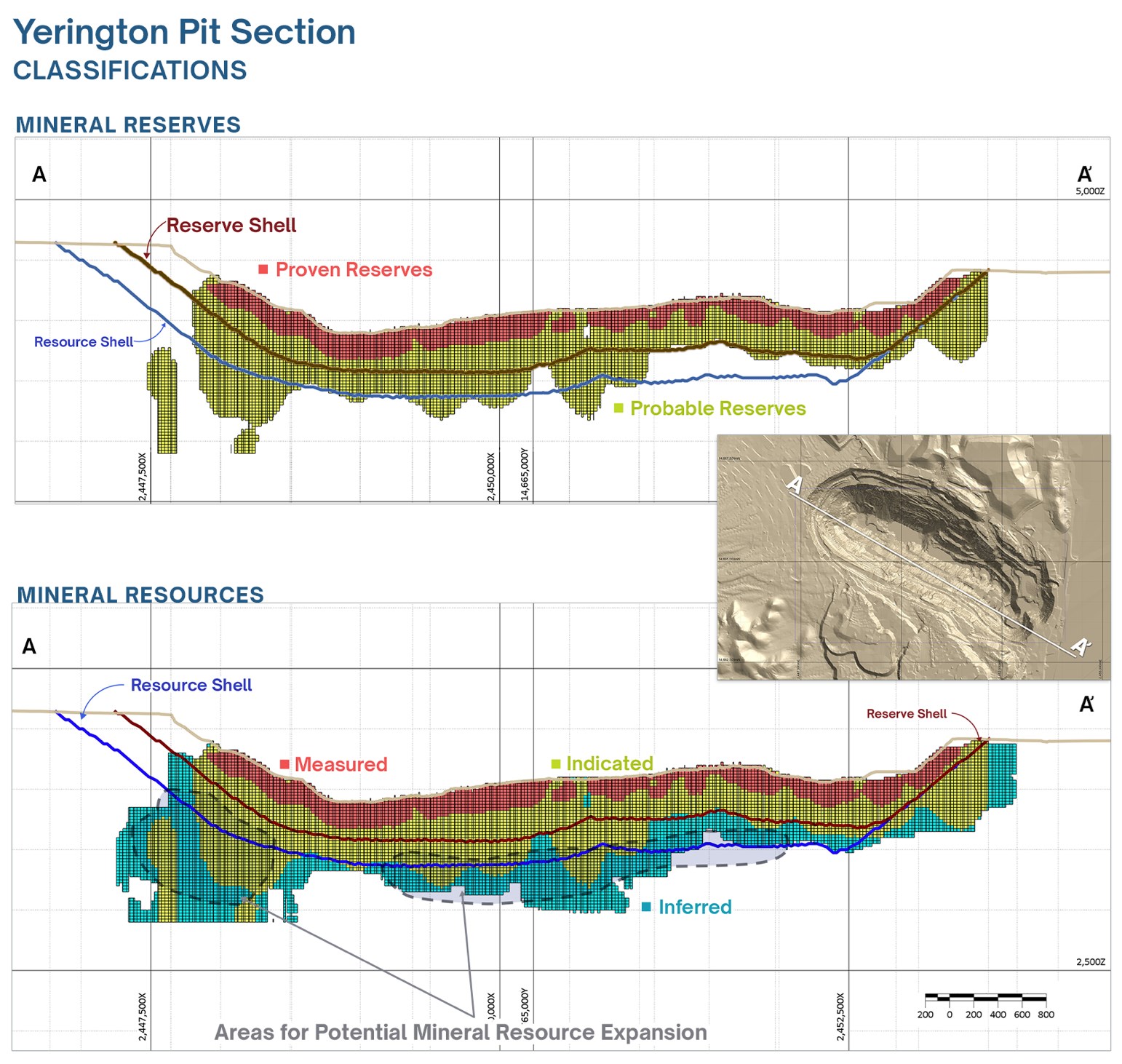
Figure 3. Yerington Pit Long Section
To view an enhanced version of this graphic, please visit:
https://images.newsfilecorp.com/files/1020/261234_fca0639ac4479bca_003full.jpg
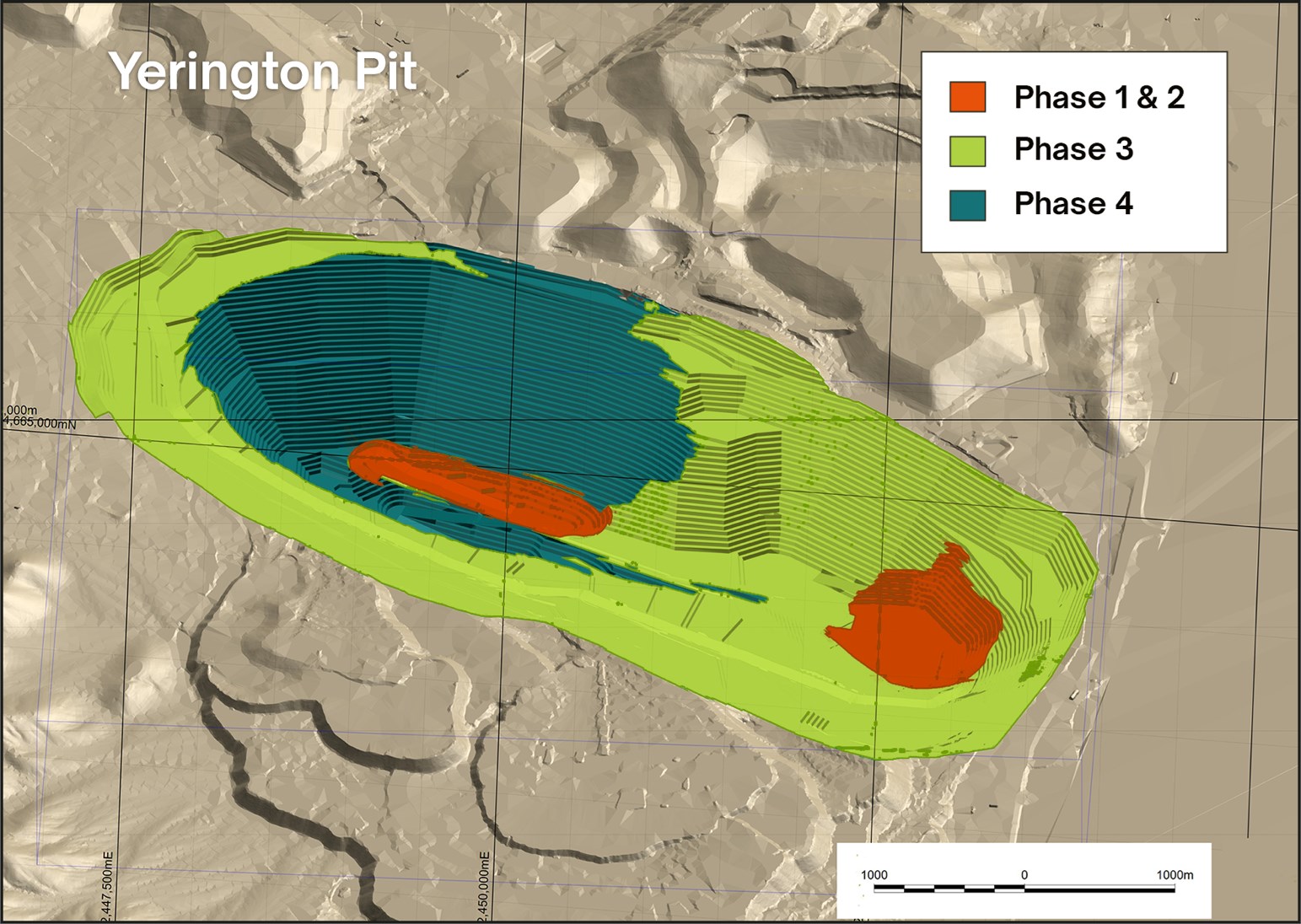
Figure 4. Yerington Pit Mine Phases
To view an enhanced version of this graphic, please visit:
https://images.newsfilecorp.com/files/1020/261234_fca0639ac4479bca_004full.jpg
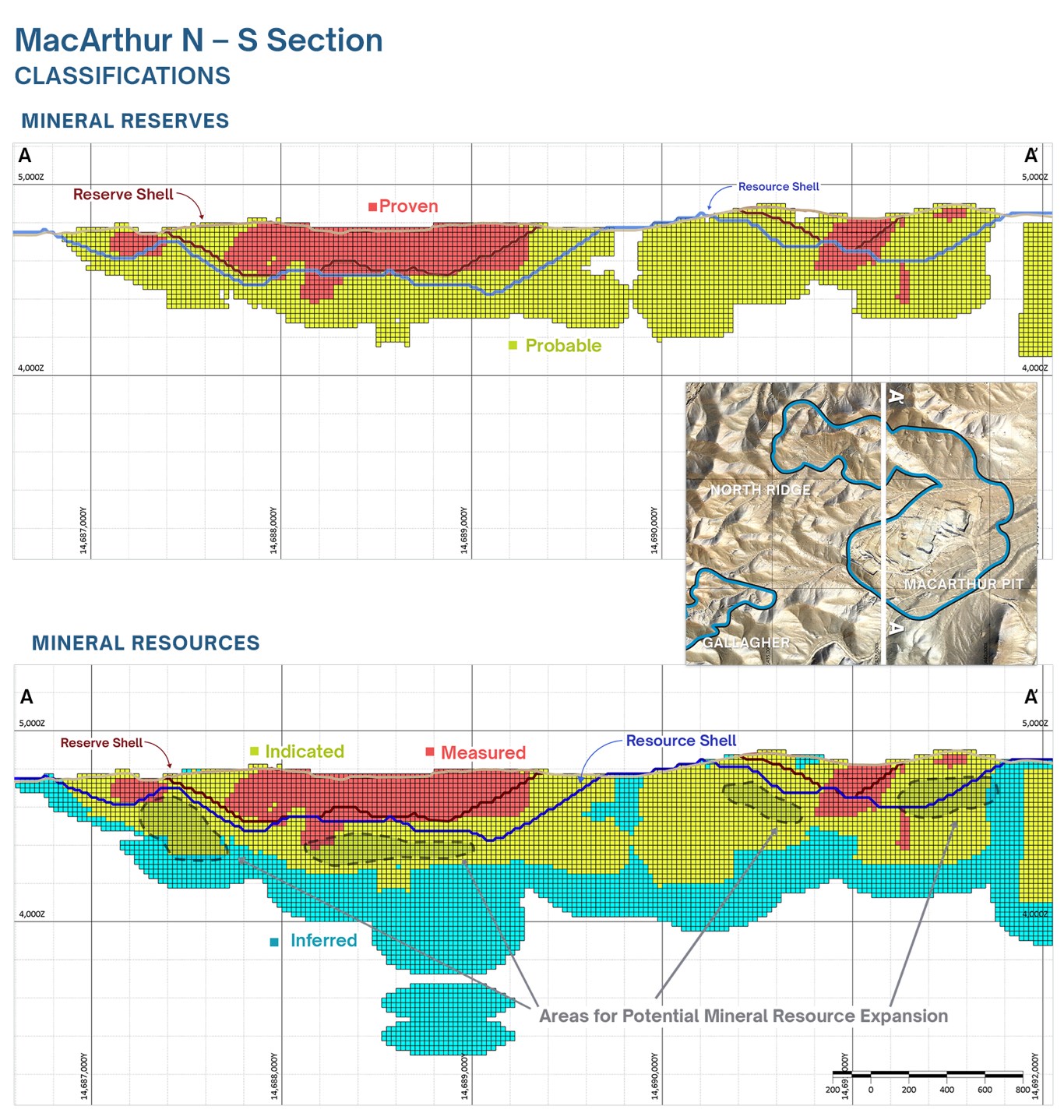
Figure 5. MacArthur Pit North-South Section
To view an enhanced version of this graphic, please visit:
https://images.newsfilecorp.com/files/1020/261234_fca0639ac4479bca_005full.jpg
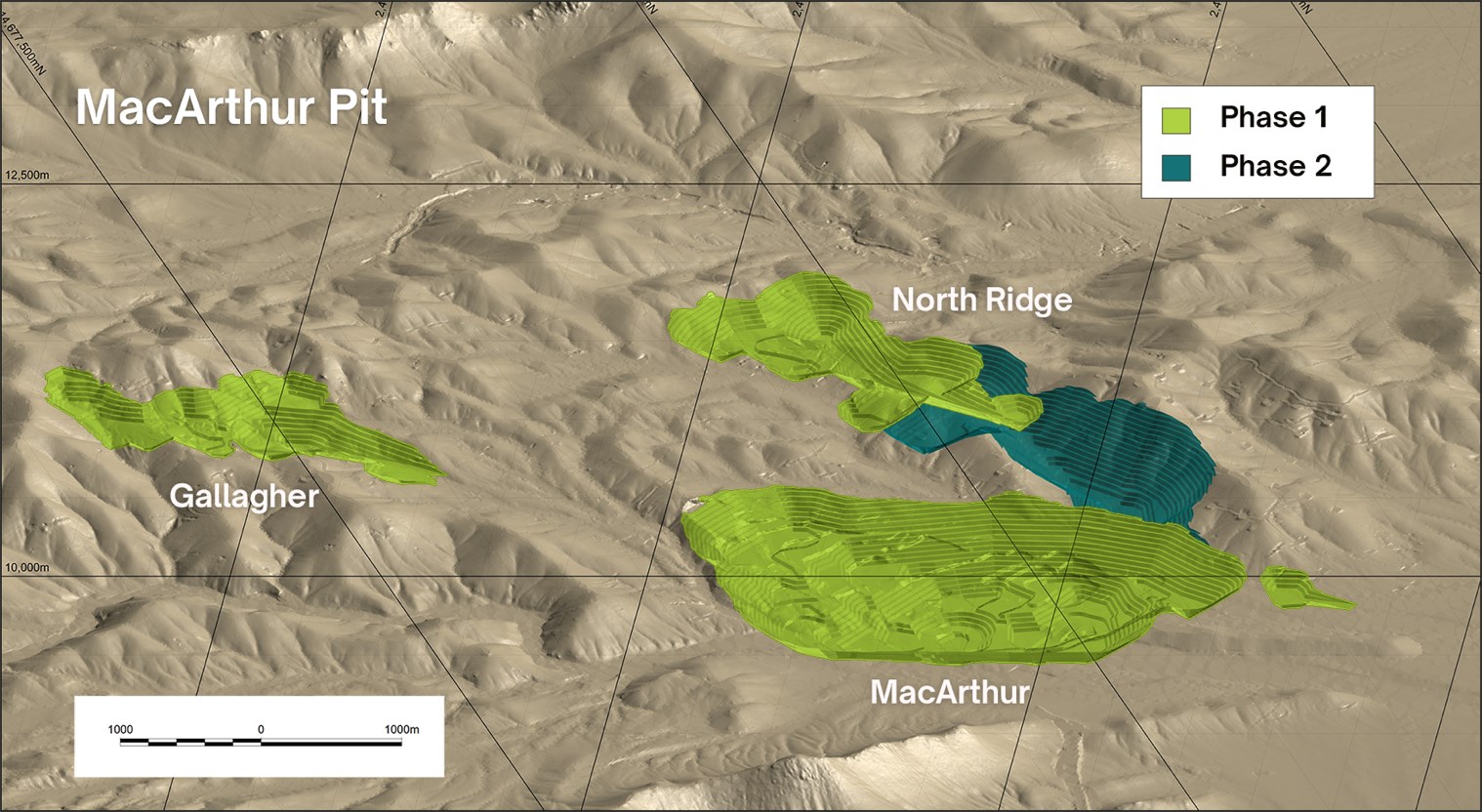
Figure 6. MacArthur Pit Mine Phases
To view an enhanced version of this graphic, please visit:
https://images.newsfilecorp.com/files/1020/261234_fca0639ac4479bca_006full.jpg
Metallurgy
Nuton™ Technology will be utilized for copper recovery in the form of bioleaching for the Yerington Sulfide Ore. Nuton technology will utilize microorganism assisted acid leach system to extract the copper from the Yerington Sulfide Ore that has been crushed and stacked onto a heap leach pad. Pyrite and Nuton additives will be added to the process at the agglomeration stage to enhance the extraction process. This innovative approach has been demonstrated via extensive column testing, lab testing and modelling to enhance the overall copper recovery for the sulfide ore, offering a lower cost and more water efficient sulfide copper recovery process compared to conventional milling and floatation.
Lion Copper and Gold in partnership with Nuton™ completed extensive column and laboratory testing on the Yerington sulfide material to optimize recoveries from deploying the Nuton sulfide leaching technology. Over 40 test columns were leached by Nuton at their own laboratory to develop both recovery models and fine tune process design criteria. The forthcoming PFS Technical Report will provide additional testwork details and associated results.
Process Description Summary
Copper will be extracted through a heap leach process, followed by SX/EW. Ore will originate from multiple sources which will be stacked and processed on three separate leach pads with two SX circuits. The sulfide and oxide ore from the Yerington open pit will be distributed onto separate heap leach pads but will share an SX circuit. The MacArthur open pits will have one heap leach pad and one SX circuit. There will be a single EW facility for the project co-located with the Yerington SX system.
The Yerington Oxide Heap Leach Facility (HLF) will be ROM truck dumped with a peak placement rate of 83,000 short tons per day (tpd) of new oxide ore and residual stockpiled ore. The crushing, conveying, agglomeration and ore stacking at the Yerington Sulfide HLF is designed for 114,000 tpd to process the peak sulfide ore placement rate of 94,000 tpd. The MacArthur HLF will also be ROM truck dump with a peak placement rate of 142,000 tpd.
The Yerington solvent extraction (SX) systems will handle up to 30,000 gallons per minute (gpm) of pregnant leach solution (PLS). MacArthur’s SX system will be designed to process up to 22,000 gpm of PLS. The shared electrowinning (EW) circuit will process electrolyte from both Yerington and MacArthur with the ability to produce up to 90,000 tons per year of refined copper cathode.
The planned mine life is 12 years, with SX/EW to be in operation for 14 years with the acid plants to be in operation for their life cycle of 19 years. Sulfuric acid production that exceeds project requirements will be sold into the domestic market. The combined copper recovery is expected to be 67.4%.
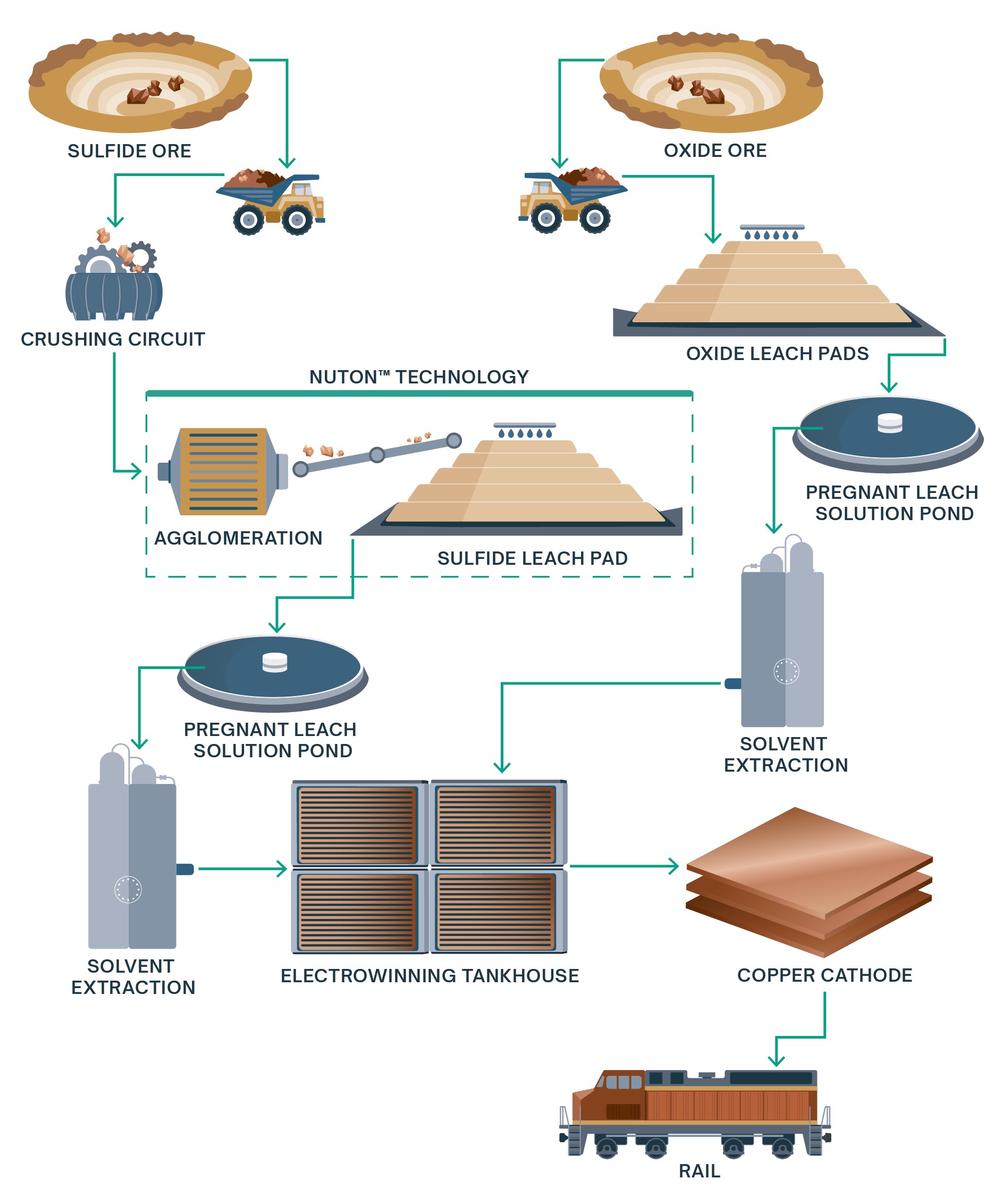
Figure 7. Yerington Copper Project Copper Cathode Production Simplified Flowsheet
To view an enhanced version of this graphic, please visit:
https://images.newsfilecorp.com/files/1020/261234_fca0639ac4479bca_007full.jpg
Project Development
Lion Copper and Gold anticipates securing all required permits and authorizations needed to construct and operate the Project within reasonable and normal timeframes. Preliminary permitting schedule estimates that the completion of baseline studies, acquisition of requisite state permits, and the National Environmental Policy Act (NEPA) process necessary for project authorization could be completed in as little as 2.5 years. Furthermore, the Project’s permitting schedule may benefit from the Executive Order (EO) 14241 titled Immediate Measures to Increase American Mineral Production issued in March 2025 to streamline permitting processes for mining projects, particularly those focused on critical minerals.
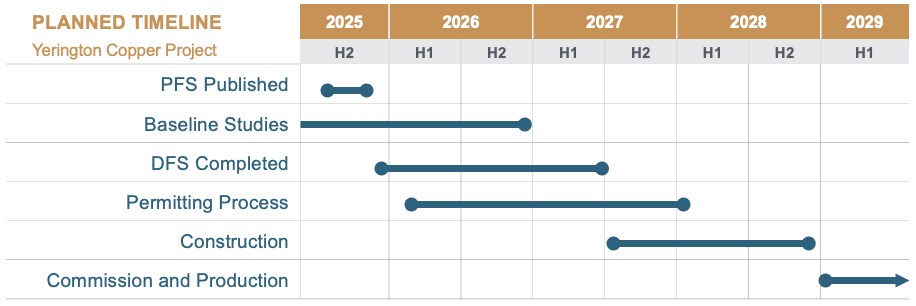
Figure 8: Development Timeline
To view an enhanced version of this graphic, please visit:
https://images.newsfilecorp.com/files/1020/261234_fca0639ac4479bca_008full.jpg
Future Opportunities
The Yerington Copper Project covers an extensive strategic land package, including the Bear Deposit and numerous other underexplored targets. While Lion Copper and Gold’s Project is compelling on its own, it creates the potential to act as a catalyst to consolidate with adjacent copper projects.
- Large and scalable processing facility to service and create synergies with several adjacent deposits, projects and operations.
- Utilize and expand on the existing resource base and project infrastructure to extend the life of the Project.
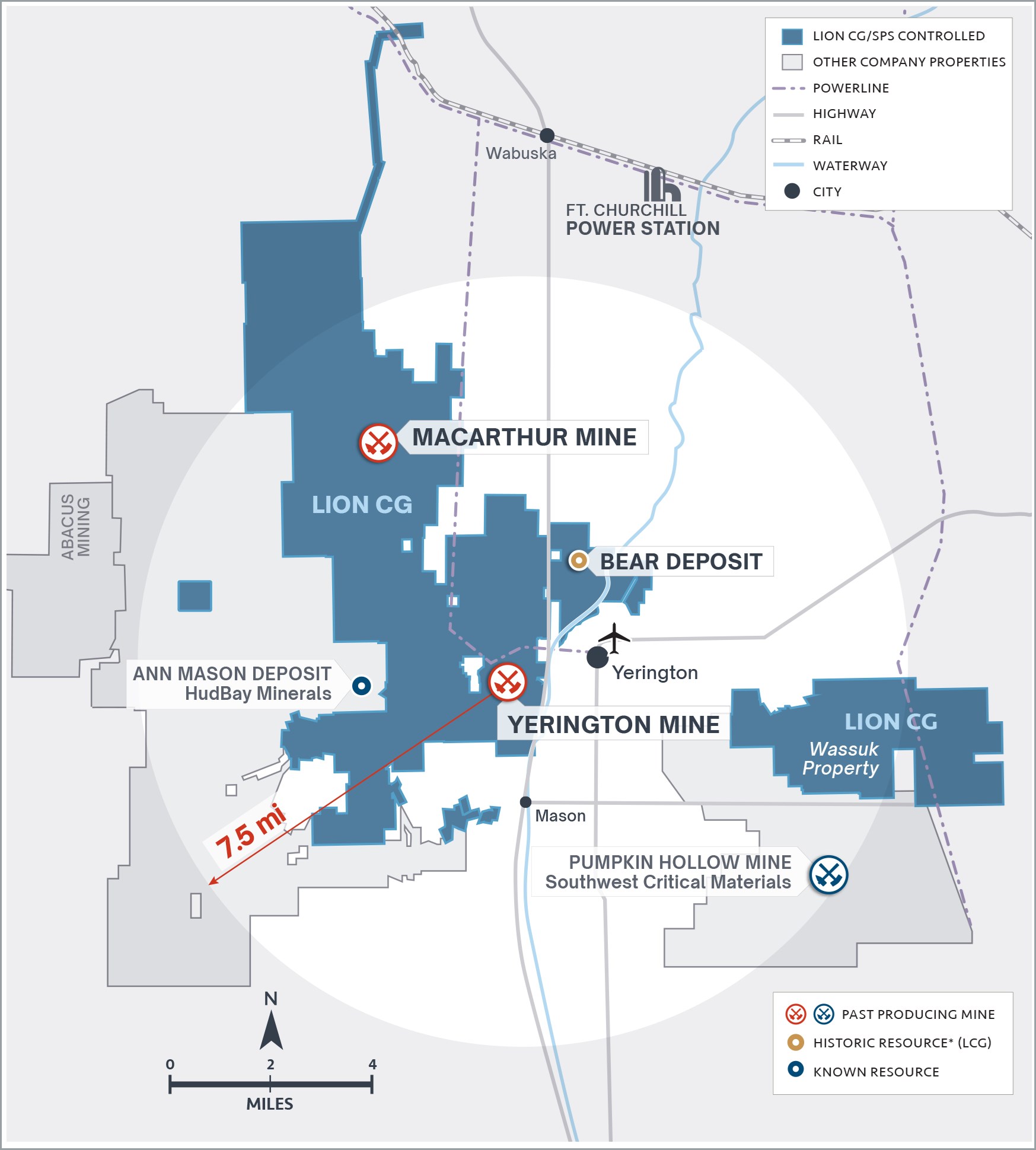
Figure 9. Yerington Area, Including Bear Deposit, Pumpkin Hollow Mine, and Ann Mason Deposit
To view an enhanced version of this graphic, please visit:
https://images.newsfilecorp.com/files/1020/261234_fca0639ac4479bca_009full.jpg
Qualified Persons
For the purposes of Canadian National Instrument 43-101, the independent Qualified Persons responsible for preparing the scientific and technical information disclosed in this news release announcing the Study are Michael McGlynn (Samuel Engineering Inc.), Gordon Zurowski (AGP Mining Consultants) Steve Pozder (Samuel Engineering Inc.), John Rupp (Piteau Associates), Tim Maunula (T. Maunula & Associates Consulting), Herb Welhener (Independent Mining Consultants), Marie-Hélène Paré (GSI Environmental) and Adrien Butler (NewFields). The Qualified Persons named herein have reviewed and approved the information in this news release relevant to the portion of the scientific and technical information for which they are responsible.
Other disclosures of a technical or scientific nature included in this news release have been reviewed, verified, and approved by Todd Bonsall, Douglas Stiles, Steven Dischler and John Banning who are Qualified Persons as defined by Canadian National Instrument 43-101 and are employees of Lion Copper and Gold.
A Technical Report in the form required under Canadian National Instrument 43-101 will be filed within 45 days of this news release and will be available on Lion Copper and Gold’s website and on its SEDAR profile.
About Lion
Lion Copper and Gold Corp. is advancing its flagship copper project in Yerington, Nevada through an Option to Earn-in Agreement with Nuton LLC, a Rio Tinto Venture.
Further information can be found at www.lioncg.com
About Nuton
Nuton is an innovative venture that aims to help grow Rio Tinto’s copper business. At the core of Nuton is a portfolio of proprietary copper leaching technologies and capability. Nuton has the potential to economically unlock copper from hard-to-leach ores, including primary sulfides and, in doing so, increase domestic production of critical minerals to support the energy transition. Nuton technologies can achieve market-leading recovery rates and boost copper production in new, ongoing and historical operations, increasing resource utilization and maximizing value.
With significantly lower energy and water needs than conventional concentrating and smelting, and the ability to produce copper cathode at the mine site, Nuton offers a reliable source of domestically produced copper, with a short mine-to-metal supply chain and the ambition to set industry-leading ESG credentials.
One of the key differentiators of Nuton is the ambition to produce the world’s lightest environmental footprint copper while having at least one Positive Impact at each of its deployment sites, across its five pillars: water, energy, land, materials and society.
To learn more about Nuton, visit https://nuton.tech/
On behalf of the Board of Directors,
John Banning
Chief Executive Officer
Lion Copper and Gold Corp.
Pre-Feasibility Study Webinar
Please join John Banning on August 12, 2025, at 10:30 AM PDT via the Livestorm webinar link below for an overview of the Yerington Copper Project Pre-Feasibility Study results, which evaluates the Project’s technical and economic viability and its potential role in the U.S. copper supply chain amid rising domestic demand and supply limitations.
Join the webinar at the link.
Contact Information
Lion Copper and Gold Corp.
(775) 463 9600
info@lioncg.com
Non-IFRS Measures
Alternative performance measures in this news release such as “C1 cash cost”, “AISC” “free cash flow” are furnished to provide additional information. These non-GAAP performance measures are included in this news release because these statistics are used as key performance measures that management uses to monitor and assess performance of the Project, and to plan and assess the overall effectiveness and efficiency of mining operations. These performance measures do not have a standard meaning within International Financial Reporting Standards (“IFRS”) and, therefore, amounts presented may not be comparable to similar data presented by other mining companies. These performance measures should not be considered in isolation as a substitute for measures of performance in accordance with IFRS.
Non-IFRS financial measures used in this news release and common to the copper mining industry are defined below.
Total Cash Costs and Total Cash Costs per Pound: Total Cash Costs are reflective of the cost of production. Total Cash Costs reported in the PFS include mining costs, processing & water treatment costs, general and administrative costs of the mine, offsite costs, refining costs, transportation costs and royalties. Total Cash Costs per Pound is calculated as Total Cash Costs divided by payable copper pounds.
Total Operating Costs and Total Operating Costs per Pound: Total Operating Costs are reflective of the cost of mine operations. Total Operating Costs reported in the PFS include mining costs, processing & water treatment costs, and general and administrative costs of the mine. Total Operating Cost per Pound is calculated as Total Operating Costs divided by payable copper pounds.
All-in Sustaining Costs (“AISC”) and AISC per Pound: AISC is reflective of all of the expenditures that are required to produce a pound of copper from operations. AISC reported in the PFS includes total cash costs, sustaining capital, expansion capital and closure costs, but excludes corporate general and administrative costs and salvage. AISC per Pound is calculated as AISC divided by payable copper pounds.
Forward Looking Statements
Neither Canadian Stock Exchange (CSE) nor its Regulation Services Provider (as that term is defined in the policies of the CSE Venture Exchange) accepts responsibility for the adequacy or accuracy of this release.
The technical information in this news release has been reviewed and approved by John Banning, QP MMSA, CEO of Lion Copper and Gold Corp., and a qualified person as defined in NI 43-101.
Certain information in this news release constitutes forward-looking statements under applicable securities laws. Any statements that are contained in this news release that are not statements of historical fact may be deemed to be forward-looking statements. Forward-Looking statements are often identified by terms such as “may”, “expect”, or the negative of these terms and similar expressions. Forward-Looking statements in this news release include, but are not limited to, statements with respect to the future exploration activities and anticipated results. Forward-Looking statements necessarily involve known and unknown risks, including, without limitation, risks associated with exploration activity; general economic conditions; adverse industry events; marketing costs; loss of markets; future legislative and regulatory developments; inability to access sufficient capital from internal and external sources, and/or inability to access sufficient capital on favorable terms; the ability of Lion Copper and Gold to implement its business strategies; competition; currency and interest rate fluctuations and other risks.
Cautionary Note for U.S. Investors Concerning Mineral Resources and Reserves
National Instrument 43-101 – Standards of Disclosure for Mineral Projects (“NI 43-101”) is a rule of the Canadian Securities Administrators which establishes standards for all public disclosure an issuer makes of scientific and technical information concerning mineral projects. Technical disclosure contained in this news release has been prepared in accordance with NI 43-101 and the Canadian Institute of Mining, Metallurgy and Petroleum Classification System. These standards differ from the requirements of the U.S. Securities and Exchange Commission (“SEC”) and resource information contained in this press release may not be comparable to similar information disclosed by domestic United States companies subject to the SEC’s reporting and disclosure requirements.
To view the source version of this press release, please visit https://www.newsfilecorp.com/release/261234
“One of Nuton’s goals is to offer a processing technology that not only minimizes water requirements, but ultimately aspires to be water positive, by restoring more water than we consume through our process,” said Yusuf Jameel, PhD, Nuton’s principal sustainability advisor.
Water is one of the five pillars of Nuton’s Positive Impact ambition, and one that could be a “game-changer” for the copper industry, where mines tend to be located in water-stressed areas.
Conventional copper processing technologies require substantial amounts of water, with estimates pegging copper water intensity at around 150m3 (~40,000 gallons) of water per tonne of copper produced (from mine to metal). As Nuton is a copper leaching technology, we have an intrinsic advantage of requiring less water than a concentrator – about a third of it. Nuton as a venture wants to take that advantage to the next level through chasing efficiencies in design, reducing evaporation, reusing wastewater in our process and other opportunities.
Towards water positivity — our North Star
Minimizing the water intensity of Nuton’s process design is an important part of the journey. But the team keeps a focus on its North Star of becoming Water Positive. The team defines being Water Positive as a situation in which we “replenish more water, at least of the same quality, than the water consumed during Nuton’s process.” This is a challenging long-term goal, but the team believes it is one that could strengthen the value proposition of Nuton and the social license of the mining industry.
“One of Nuton’s goals is to offer a processing technology that not only minimizes water requirements, but ultimately aspires to be water positive, by restoring more water than we consume through our process,”
Yusuf Jameel, PhD, Nuton’s principal sustainability advisor.

Charting a water positive path — one step at a time
Every drop of water — even evaporates — matters in Nuton’s process. The current process design aims to minimize water evaporation from the heap through a thermofilm, which acts as a covering blanket and traps moist. By reducing leach pad evaporation, Nuton aims to conserve significant amounts of water, especially important in arid environments like Arizona and Nevada, where some of Nuton’s partners are located. The deployment of Nuton technologies at the Johnson Camp Mine in Arizona, currently under construction, is a prime opportunity to test these and other technical solutions to reduce water intensity and pursue Nuton’s ambition to become water positive.
Nuton’s commitment to sustainability
The Positive Impact Ambition is a core theme in Nuton’s dedication to sustainable mining, with water conservation being a crucial component of that mission. Read about our additional Impact Pillars: Energy, Land, Society and Materials.
Steve McCabe has a packed schedule. As a Senior Deployment Advisor at Nuton, a Rio Tinto venture, his job is to help bring the company’s groundbreaking heap leaching technology to life.
“It’s a lot of coordination,” Steve said, putting it simply.
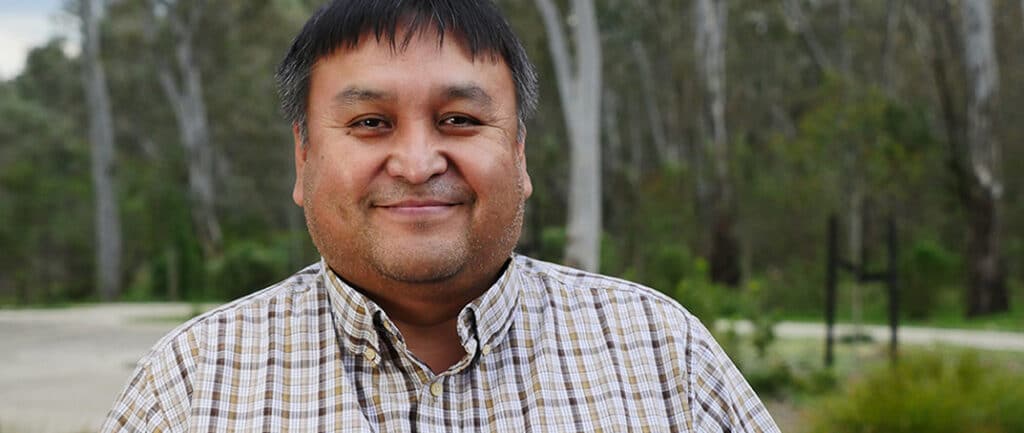
From working with vendors and leading teams to building mobile labs, and analyzing materials, there’s no shortage of moving pieces ahead of Nuton’s first large-scale deployment at Johnson Camp Mine in Arizona.
Lately, Steve’s main focus has been on agglomeration, a critical step in Nuton’s process. In this phase, fine ore particles are bound together using a blend of additives and solutions, improving permeability and ensuring uniform leaching. This step is essential before the material is placed on heap leach pads, where the bio heap leaching process efficiently extracts copper.
Steve’s passion for his work is evident in his deep knowledge and expertise when discussing his daily responsibilities. He is acutely aware of his journey — from an engineer to a metallurgist to a deployment advisor —and he remains grateful for every step. As the first person in his family to attend college, he understands the significance of higher education.
“There are a lot of challenges that tribal students face,” said Steve, a member of the San Carlos Apache Tribe. For many students in his community, college may not seem likely—or even possible. The reasons are multiple and complex. Some students may not know how to take the next step after high school, while others may feel overwhelmed and unsure of what to do if college is in their plans.
“Many Tribal students underestimate themselves,” Steve explains. “They don’t see their potential. But with the right guidance, they can break through those mental barriers and start seeing what’s out there for them”.
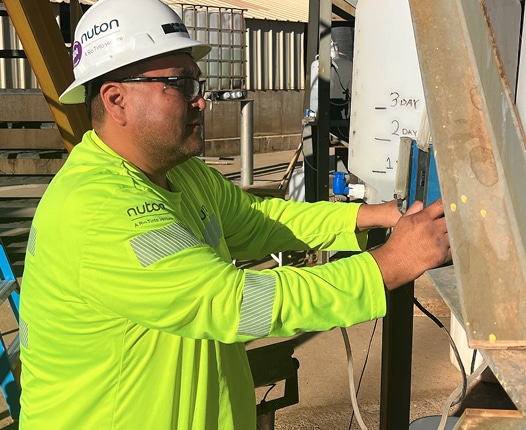
But having a role model—someone who’s been there—can change everything. Before joining Nuton, Steve dedicated years to his Tribe’s education department, assisting students navigate the college process. He continues to mentor high schoolers today, guiding them toward opportunities they might not have realized were within reach.
Steve understands their situation well. When Steve first stepped onto Arizona State University’s campus, he intended to become a nurse. However, after exploring different degree programs, he discovered a passion for chemical engineering. That decision changed his life.
Steve’s education has had a ripple effect—not just for him, but for his entire family. Two of his three children attended Stanford University, and the other recently enrolled at Yale. He doesn’t share this to boast, but to illustrate what’s possible.
“Many Tribal students underestimate themselves,” he explains. “They don’t see their potential. But with the right guidance, they can break through those mental barriers and start seeing what’s out there for them”.
Just like Nuton is working to change the future of copper mining, Steve is working to change the future for students in his community.
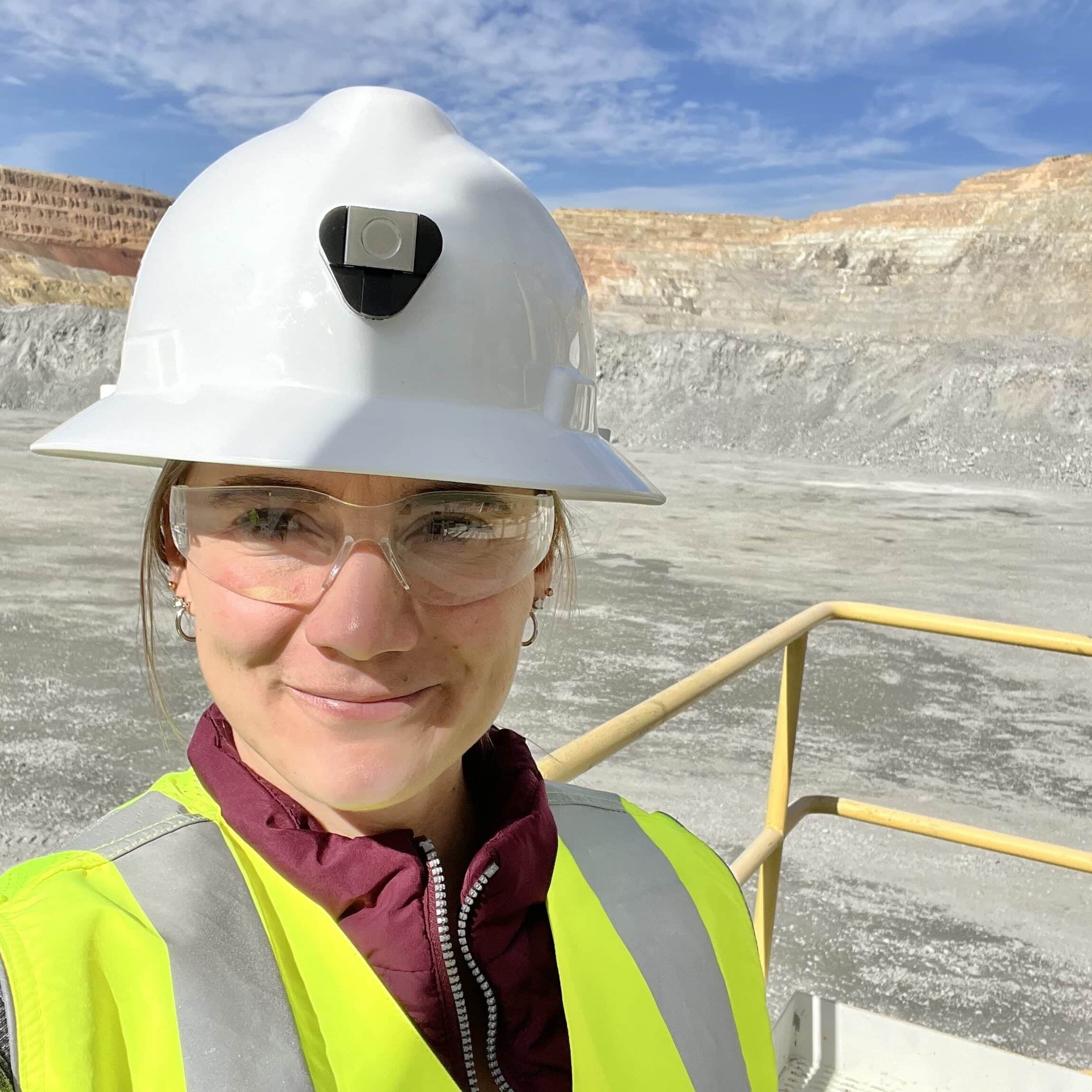
Jeana Ratcliff, who works as a Senior Sustainability Advisor at Nuton, a Rio Tinto venture, was born to be a scientist. Growing up in Montana, she spent her childhood outdoors with her science-minded parents, rock-hounding and learning about geology.
Her curiosity extended indoors, where – she constantly tinkered with electronics, learning the ins and outs of any machine she could get her hands on. Jeana fondly recalls buying an old keyboard, taking it apart, and attempting to reassemble it with her two sisters. Her inquisitive nature and love for learning have persisted into her current role at Nuton.
In celebration of International Day of Women and Girls in Science, Jeana shared insights about her career journey in the sciences, lessons learned along the way, and the advice she would offer others, especially women, considering a career in science.

What does a typical day at Nuton look like for you?
That’s a big question (laughs). Nuton is very dynamic, we’re growing and changing everyday. My focus on sustainability is really Nuton’s overall mission; to produce copper with a positive impact. I’m lucky to be involved in bringing that vision to life.
Most of my work is to directly engage and interface with our partners. I assess where their operations currently are, and how we can explore further opportunities to improve performance through Nuton. We like to challenge the status quo by asking ‘How do we move forward in creating a more sustainable kind of copper supply chain?’
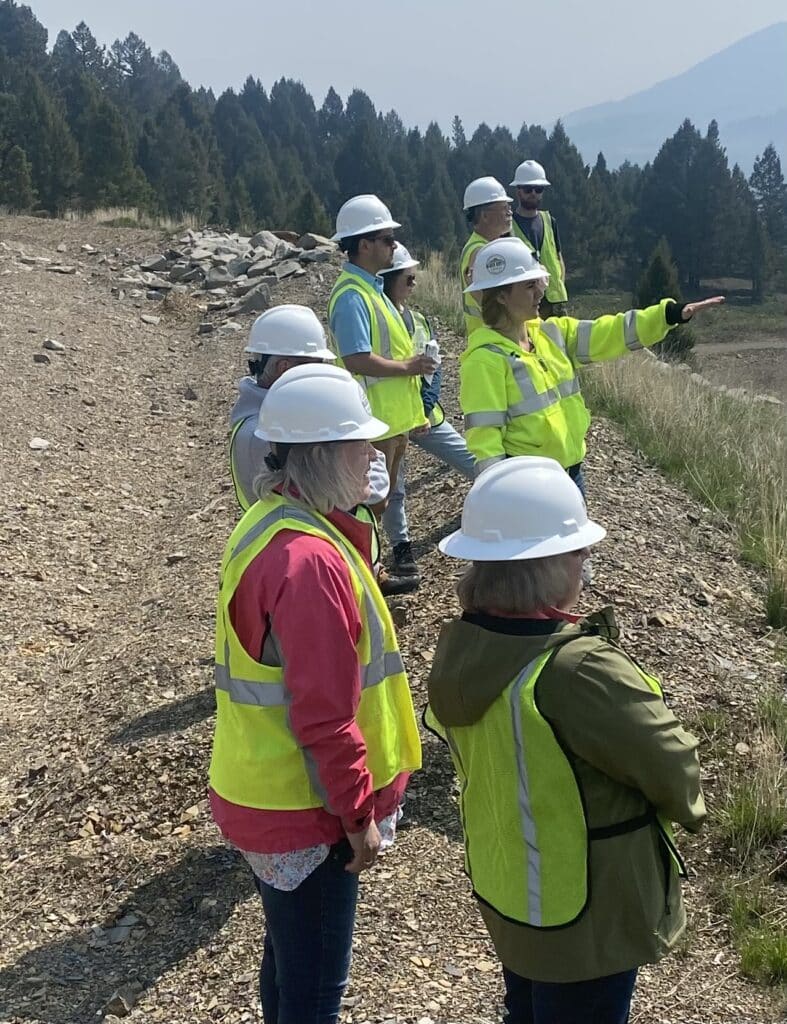
Day to day, my work is quite varied. It’s a good mix of relationship building and data management, and I get to spend some time out in the field every now and then. I enjoy getting out there and being able to see operations, boots on the ground.
Do you like your job?
Yes! Mining is very interesting. You touch every science discipline in this industry. Especially the environmental sciences but also there’s water, biology, chemistry, electrical, mechanical; there’s sort of a piece of every kind of science. I learn a lot every day, which is fun.
How did you first become interested in this particular field?
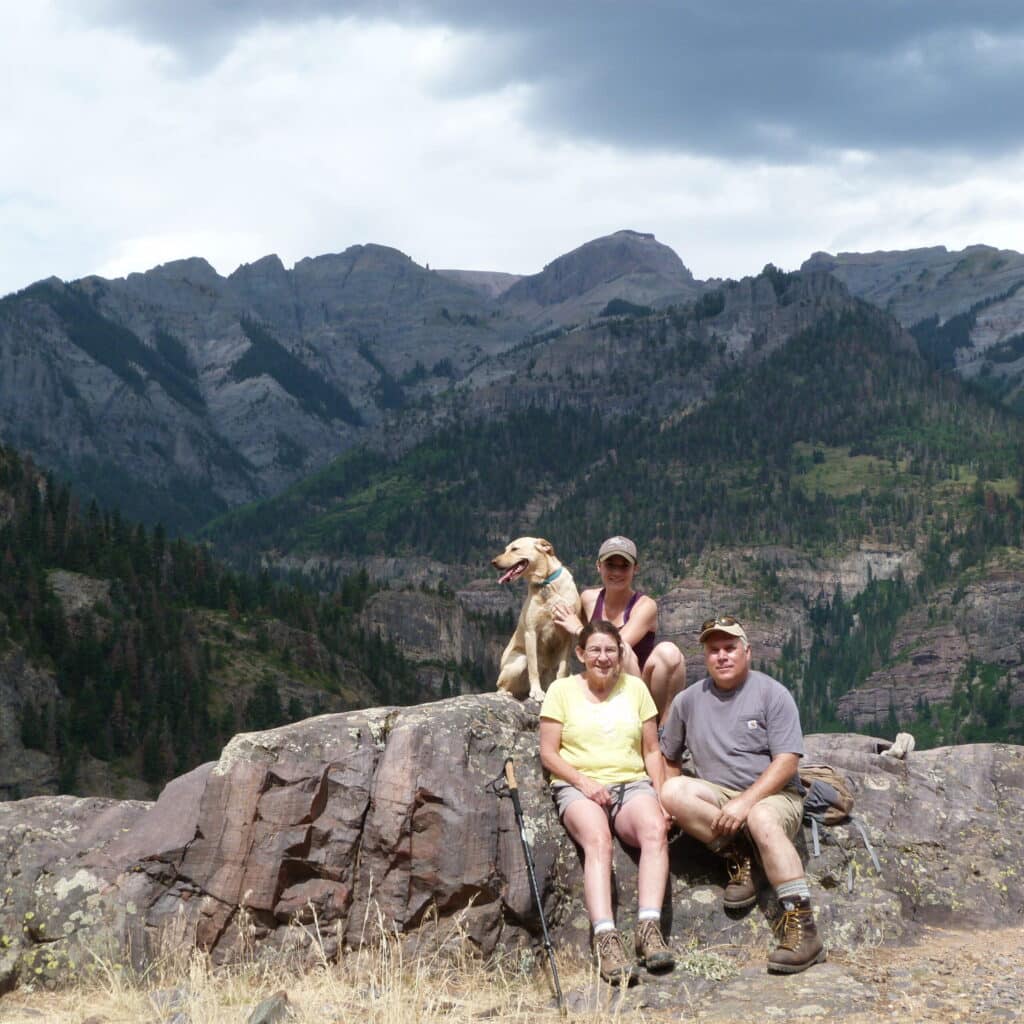
Most of my family is in the mining industry. My dad is a geophysicist, my mom is a geological engineer. It’s funny, when I first got to college I wanted to explore other careers, but I ended up with a degree in civil engineering and land rehabilitation and found my way back to mining. It’s just fun and super dynamic! Much of my interest had to do with the exposure that I had growing up with my family and the things that we did together. This work is fun, I like it, and I feel like I’m good at it.
What kind of science or mining activities did you and your family do when you were young?
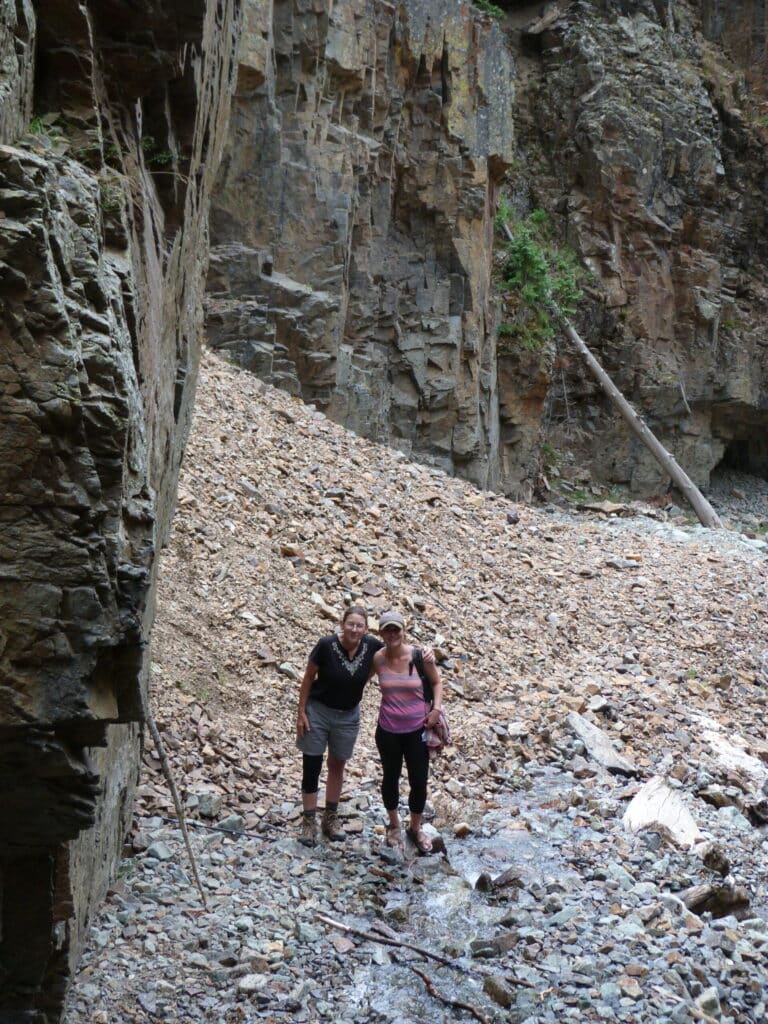
We loved going out to do small-scale prospecting or rock-hounding even. For much of my childhood, my mom was working on mine sites, so having that female role model was huge. What she was doing while being a mother to our family was just a normal thing for me. It didn’t feel like there was a barrier to being a woman doing science-related work. I was like, ‘Oh, Mom’s doing it, so off we go.’
What does it mean to young women to have a role model to look up to in your industry?
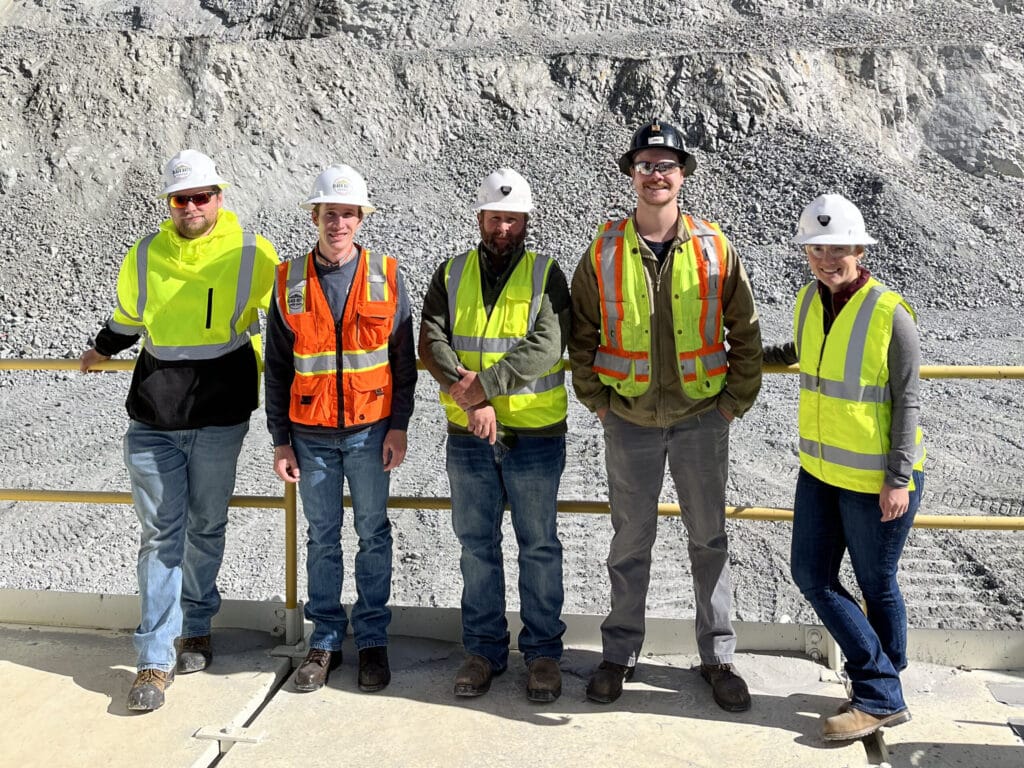
I think it’s huge. The classic saying is, if you see it, you can be it. I think that that’s true for a lot of people. Sometimes in the mining industry, there’s still this perception of who does that kind of work. To work in the mining industry does not mean that you’re the guy in the tunnel with the pick axe. Those jobs do exist in some places, but there’s so much more out there.
Having women in leadership positions and different roles can help others understand that there are many different paths to being successful in mining.
What’s your message to young females considering a science-related profession, perhaps in mining specifically?
I think my biggest message is that you don’t have to know everything, and you don’t have to be perfect. A lot of engineers, and scientists, particularly women, struggle with this.
Even as you get further into your career, you should still be learning. There’s a lot of imposter syndrome or fear of asking questions, but I recommend just being curious and allowing yourself to learn more and come up with new ideas. It can feel vulnerable. But realize you don’t have to be 100% perfect at everything to have success.